

Douglas gordon, born 1966, is a scottish artist that lives and works in berlin. Known for his video work he explores the subjects of collective memory and repetition often using his audience as an important part of the work. He uses old found footage along with text and performance to challenge and question his audience. Gordon avoids imposing meaning onto his work , as his aim is to motivate people to take time to think; his work opens up a world for self- exploration.
-His work often uses words to address the viewer like ‘i’ and ‘you’ creating a direct connection with the artist. It can be confrontational or relatable, with words so directly connected with communication its hard to ignore what they might be trying to say. On the contrary, his words convey ambiguity the viewer can place any meaning they like within these works.
-I like how words can be taken out of context and altered to the readers state. i feel that no matter how clear you are with what you are trying to say it will never be read exactly as intended. this made me think about how automatic writing can be used; often the bits of writing can be incoherent, something that makes sense to you could be nonsense to someone else.
– you can see in the way gordons words are often presented are so structured and thought through, the placement of his words are heavily considered so that it holds importance.
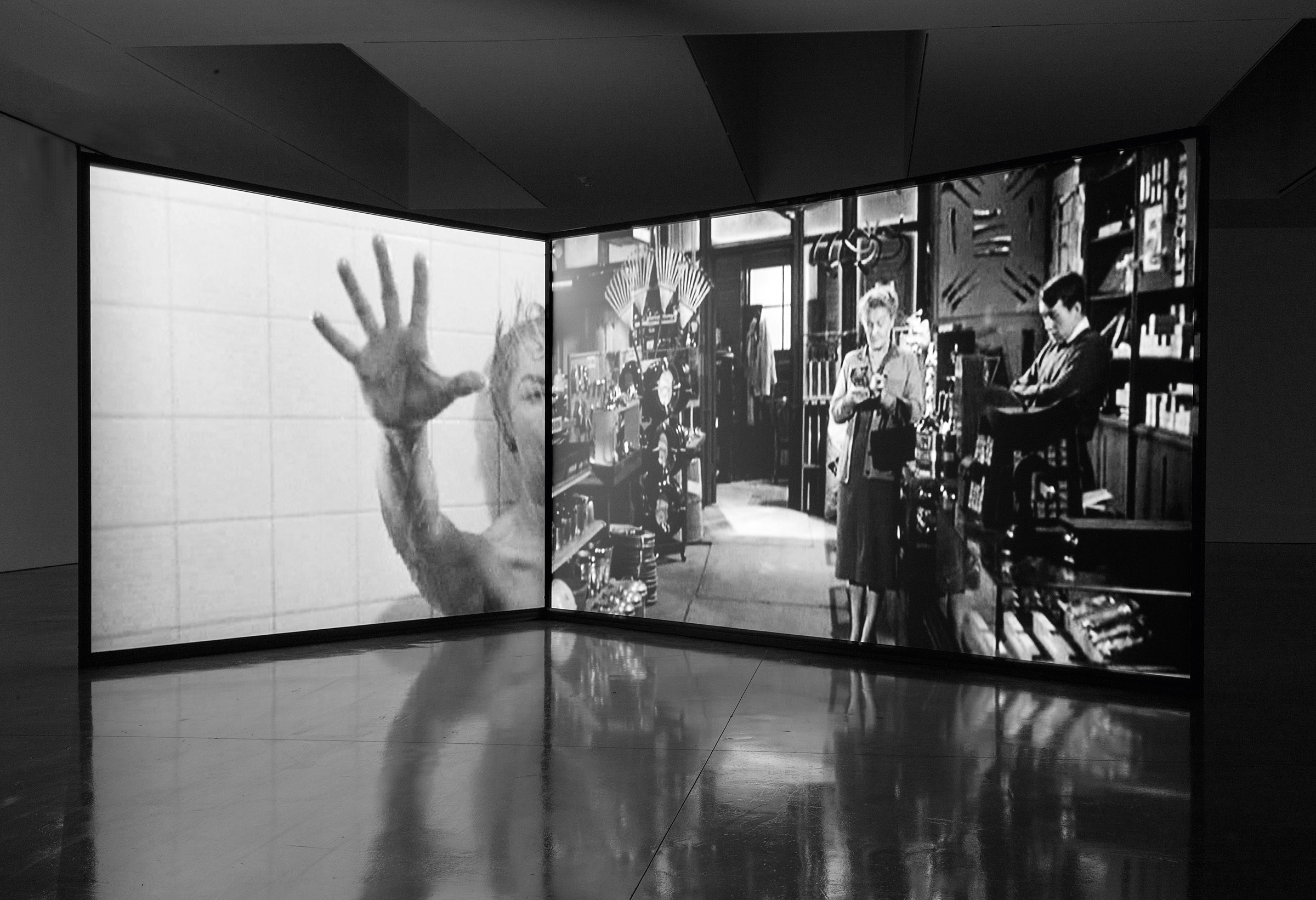
– In other works such as “24 hr psycho” he manipulates well recognised footage to alter its intentions- he slowed down the film “psycho” by Alfred Hitchcock to span over 24 hrs. The storyline is lost, it creates a break in time; you begin to investigate other elements of the original video and consider our own response.
– Often when taking time to daydream/meditate/slowdown words make their way into my mind that dont always connect. Having looked at douglas gordon’s work i want to play with this in spoken word and video to show passing time and movement; experimenting with the permanence of words.
 Abigail yeats CAP