Grayson perry

Born in 1960 in chelmsford, England, Grayson Perry is a contemporary artist and writer known for his vases and tapestries. He began the path to his most recognised work by attending an evening pottery class, Within year he was creating his famed vases held at the core of his career. They serve as an absurd story telling tying into a commentary of our time, often depicting scenes of chaos challenging the way in which we understand the world around us. These tales knit together with his own autobiographical references, some telling a narrative of nostalgia and lost innocence. I like the idea of bringing a familiar household object and adding value to it with a story, it feels easily accessible by the viewer because of its domestic connotations – it doesn’t require any special knowledge to understand. This makes the art approachable and somewhat interactive with a nod towards function, we don’t feel so separated from them like you would with a painting on a wall.
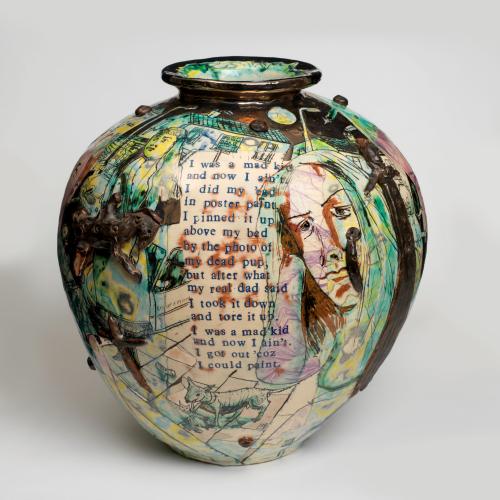
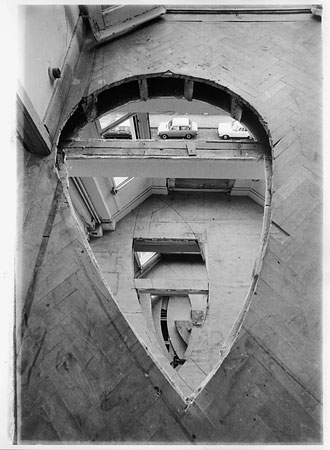
Image result for grayson perry vases

Gordon Matta clark

He began his career by attending Cornell university to study architecture not breaching into the art world until much later. Combining his creativity and breadth of knowledge of architecture he developed structures know as ‘anachitecture’- these works broke up the framework of typical buildings by slicing into them. Large sections of building were sliced out, often in teardrop shapes, abstracting the structure and cutting new depths into the building. initially you would identify a rejection of architecture ,however, his learning of the subject was actually considered to be the material and fuel he worked with; bringing attention to sections and layers of a building and creating an appreciation for the often unnoticed support around you. The choice of a domestic setting intrigues me, along with the pictures, it highlights a sense of past; like scanning through old memories piecing together broken up events and surroundings. The fact that these buildings are cut up makes the original purpose of them redundant, i want to take inspiration from this by breaking up my pieces so that the function of them no longer exists, bringing connotations of an active past and a current deterioration.

Louise Bourgeois

Bourgeois work is fuelled heavily by her past and childhood, from a first glance you can witness raw emotion, experience and the significant role her history plays. Her mothers illness and fathers affair were events that plagued her throughout her life and art. She states she is “a prisoner of my memories” – her creativity stems from the desire to rid herself of the terrible experiences she had endured- holding on to them and letting them guide her through her future with all the intensity they bring. Her ‘Cells’ specifically delve into her past, like capsules of memory they are inclosed, held in a precious space, cherished and resented. They keep alive the power of her memories by altering her recollection to emphasise her perception. The idea of an enclosed space inspires my practice, it reminds me of the undeniable dominance a negative memory can hold. The imbalance is something i plan to explore and hopefully discuss the inequality of space these memories grip.

Edmund de waal

Edmund de waal is a modern ceramic artist, known for his vast installations of simplistic porcelain pots. He says that the repetition of making and producing is and expression of time, his works are all lined up and unified however still show unique stories and a snapshot of time in each individual pot. ‘A thousand hours” explores the significance of the process leading up to the exhibition of work, the name forces you to consider the process as something equal and as full as the outcome. The shelfs replicate something you would see at home, collected goods protected and out of reach, familiar but special. This formed connections with my project of short term fragile memory due to process you go through whilst looking at them. He explains that the idea is that you catch sight of something then focus on that and then soon loose that pot amongst the many others; still there but currently irrelevant, pushed to the back of your brain. You can see the history and memories preserved in a physical object, the fingerprints and imperfections bring back a reminder of the hours spent touching and shaping the clay.