Marianne Eigenheer
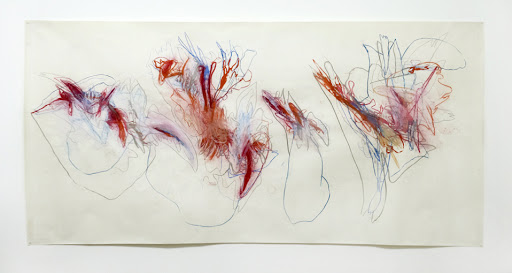
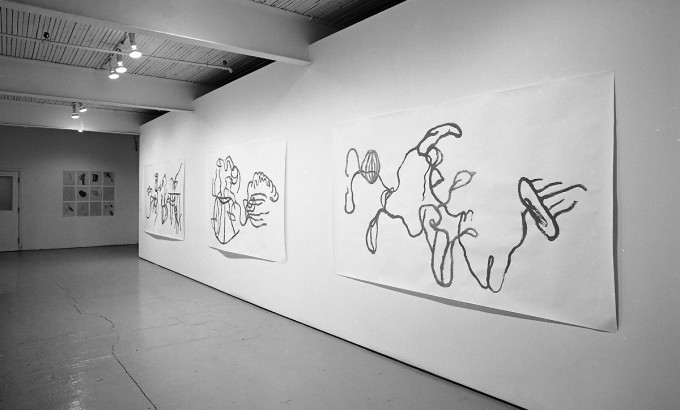
– Marianne Eigenheer (20 April 1945– 15 January 2018) was a swiss artist whose focus was in drawing, she worked also as a professor and lecturer at various art colleges and academies. As a child in the 50s she received piano lessons and grew her love for music, she wanted to be a pianist and composer. However this was not possible and she focussed this energy into drawing and painting.
– I feel her roots in music influence her work, the decisive lines remind me of the movements of a conductor’s baton. These movements varying in intensity and path.
-i love the simplicity of the drawings i feel her decision making of what to show on the paper feels emotive. You can make out recognisable shapes but at the same time i feel she has picked the lines that attract he the most to represent, leaving lots of negative space and room for appreciation for the abstract.
– i feel inspired by what cant be seen in the pictures, i want to created work that doesnt appear to be completed.
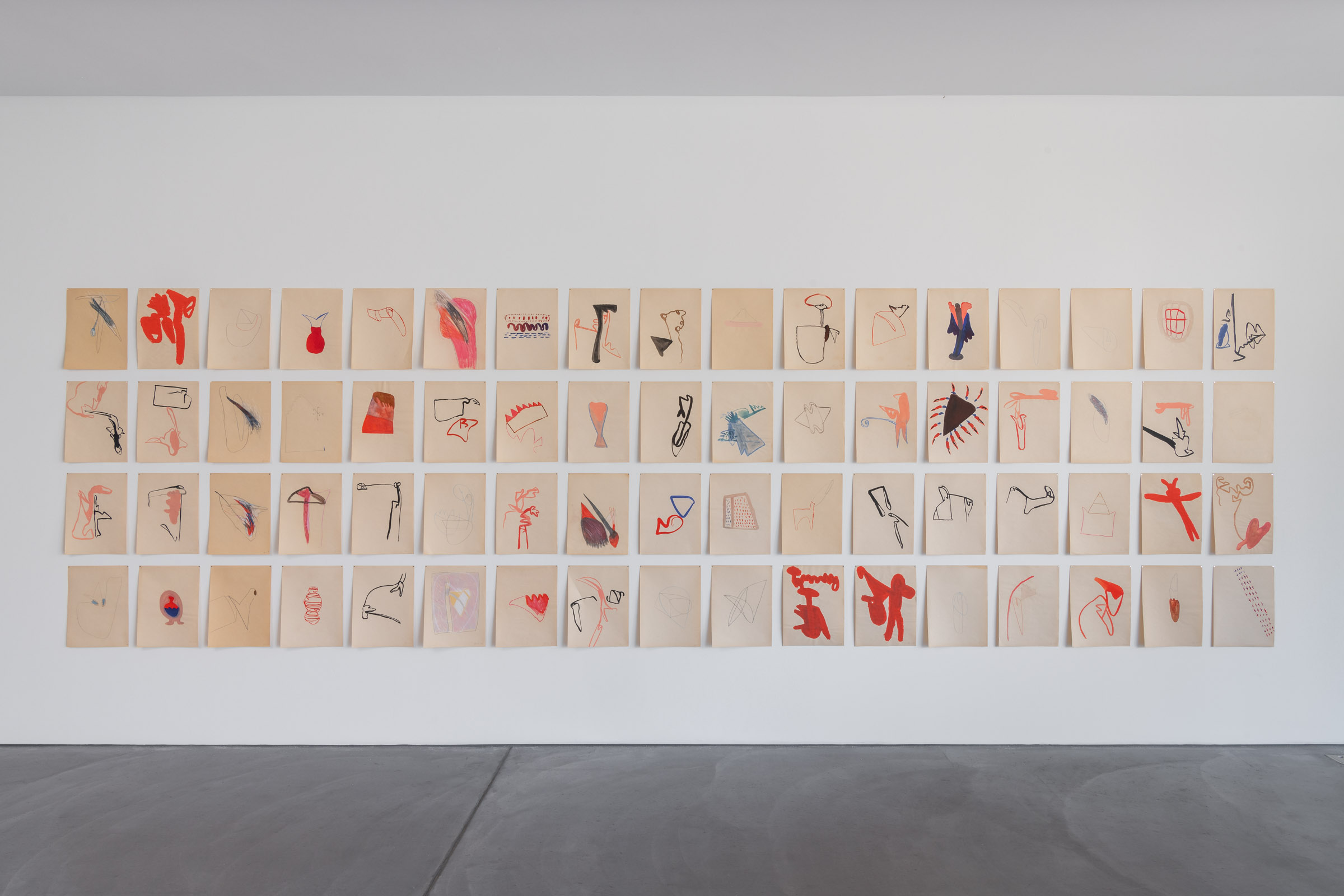
– she created a collection of postcard sized drawings in 1980 called “Bilder zur Lage”, all of the drawings where simple lines and abstract yet as a series came together like an orchestra.
– i like the idea of many drawings of the same subject coming together to look completely different. i also feel that this could help my work by taking the focus away from perfect time consuming drawings.
– the variety of the lines and the size of canvas creates a dynamic dance-like impression, i aim to channel this energy into my work to avoid it feeling so stagnant.
– speaking about her work she says “they literally represented my physical state”…”A reflection of one’s own condition”. This confirms the impression i get from these drawings- she doesnt feel much for representing the subject matter but uses objects as a way to convey her current state.
Toba Khedoori


Khedoori was born in 1964, Sydney and received her M.F.A at the university of california in 1994.
– On large (20-30ft) canvases and wax coated paper she explores domestic objects and settings. These impressive works bring charm to seemingly banal and mundane objects.
– There is a contrast between the heaviness of the paper and space it takes up to the delicate lines and details on the paper. A thorough attention to detail is obvious whilst also selective, and in some of the works she draws with painterly qualities.
-I find importance in the way she chooses to take up the paper; rarely filling the whole canvas, the decisive placement conveys a sense of vastness.
-The size of the work forces it to become another room space in itself, it feels far from the feeling you get of a typical drawing on a wall. Although the work is delicate, its presence is anything but.
-The separation of the subject from any form of background creates a structural focus point, it feels similar to the way a sculpture would in a room.
– I love the drawings ability to appear dainty yet limitless, it inspires me to play with scale of the drawing and be more selective of subject matter. The paper that the drawing is on also brings character to the work, there are many imperfections and the fold and tears add so much to it. I want to look at what effect the surface can have on the work and play around with materials to create texture with.
Karla black
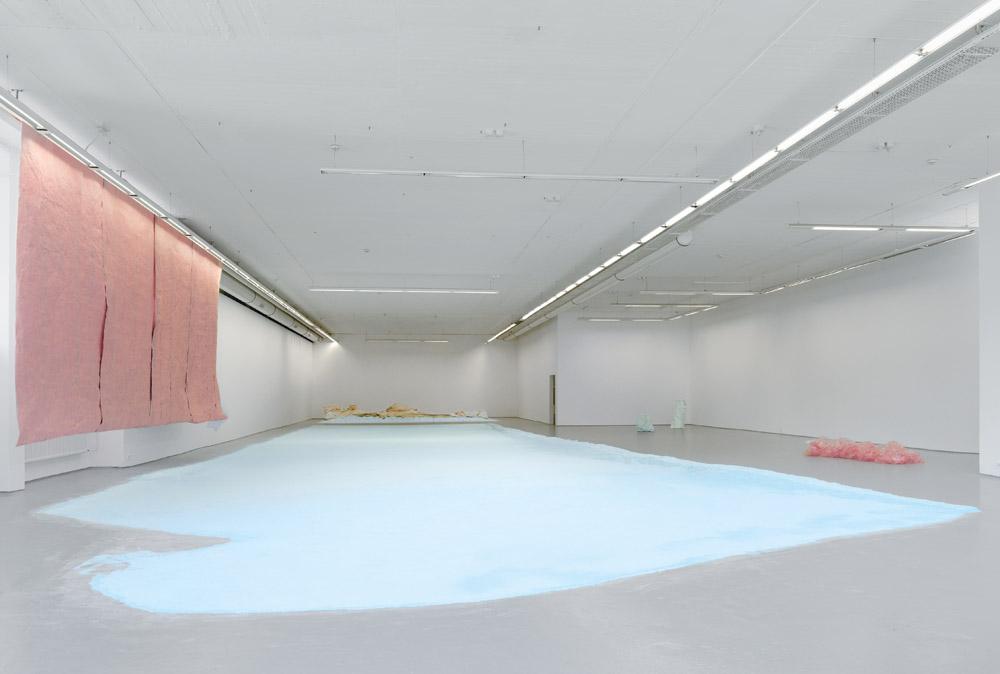
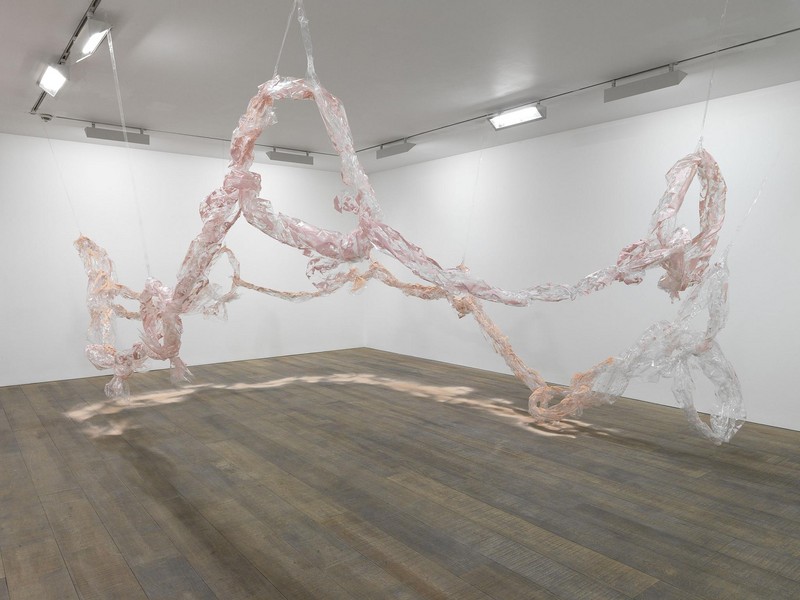
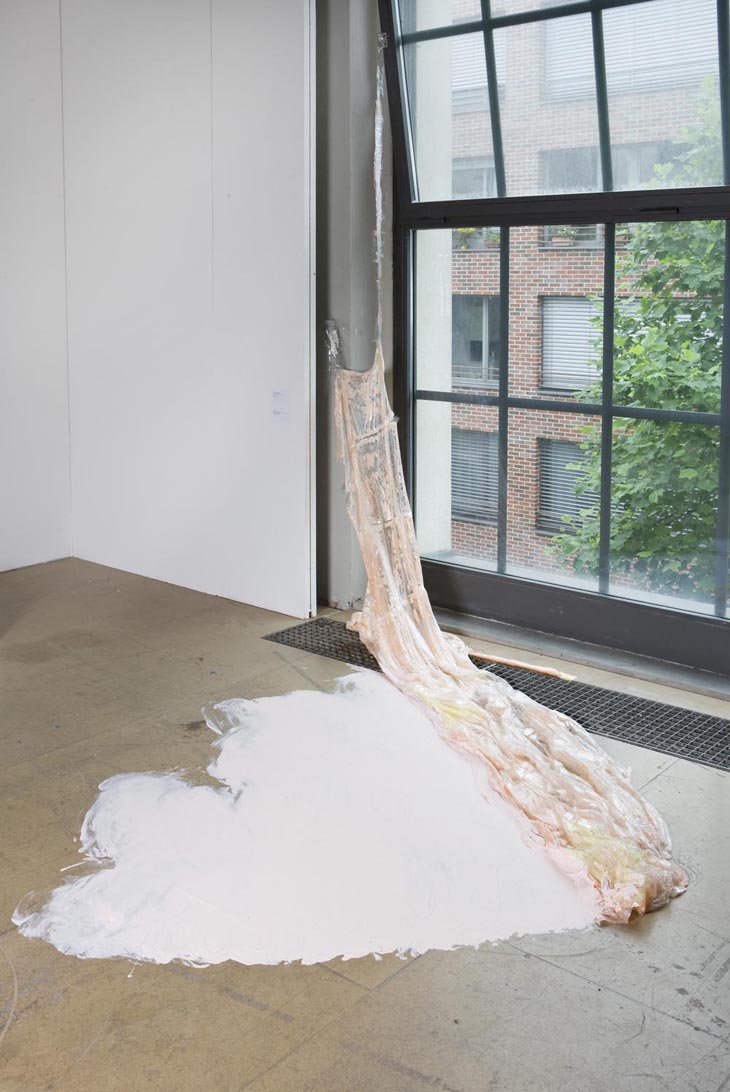
Karla Black is a scottish artist, educated at the glasgow school of art 1995-1999.
– Her work is very investigative of the materials she uses. she tends to adopt what comes to hand (toothpaste, hairspray), using her intuition to see outside of typical sculpting mediums- she pushes them to discover all the effects they could possibly give.
-Her work takes influence from the explorative forms that come from sculpture in postmodernism (land art, performance, sound) – she wants to absorb the experimentalism of these mediums but pull it back into sculpture and the focus on aesthetic.
– The colours in her work tend to be very muted pastel colours- i like the way she uses just a touch of colour amongst the surface materials; its something i would like to practice to use colours in less obvious ways.
– she talks about the history of the sculptures she creates- continually building upon happy accidents to become something with many layers. ” the process of painting is the sculpture”. This helps me to be more ok and confident in my decisions; often it takes a long process of decisions before i create. However, i want to start being more instinctive and trust my self to create without second guessing and to be ok with mistakes.
– They way she creates sculpture feels similar to drawing- lots of gesture mark making and direct handling of colours. working into it like you would when drawing. she says she brings the drawing “process into sculpting”. This makes me think about how i can do the opposite- bring techniques of sculpting into drawing- thinking about the lines that can be drawn from sculpture.
roger ackling
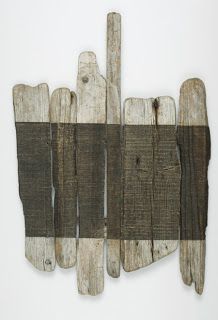
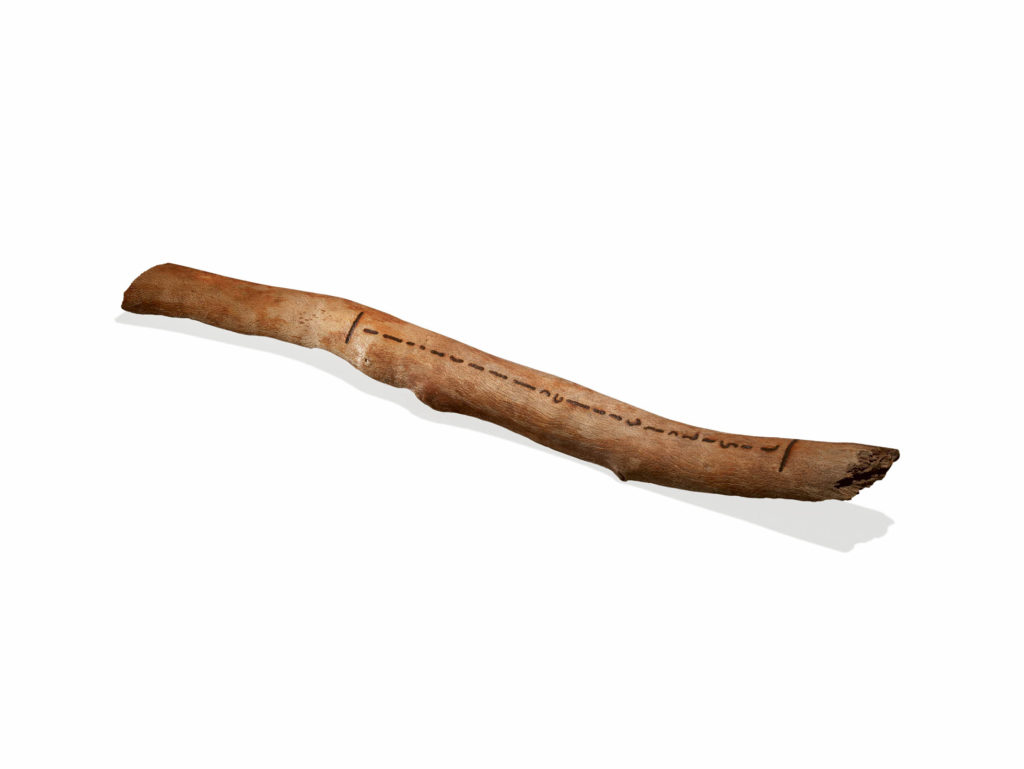
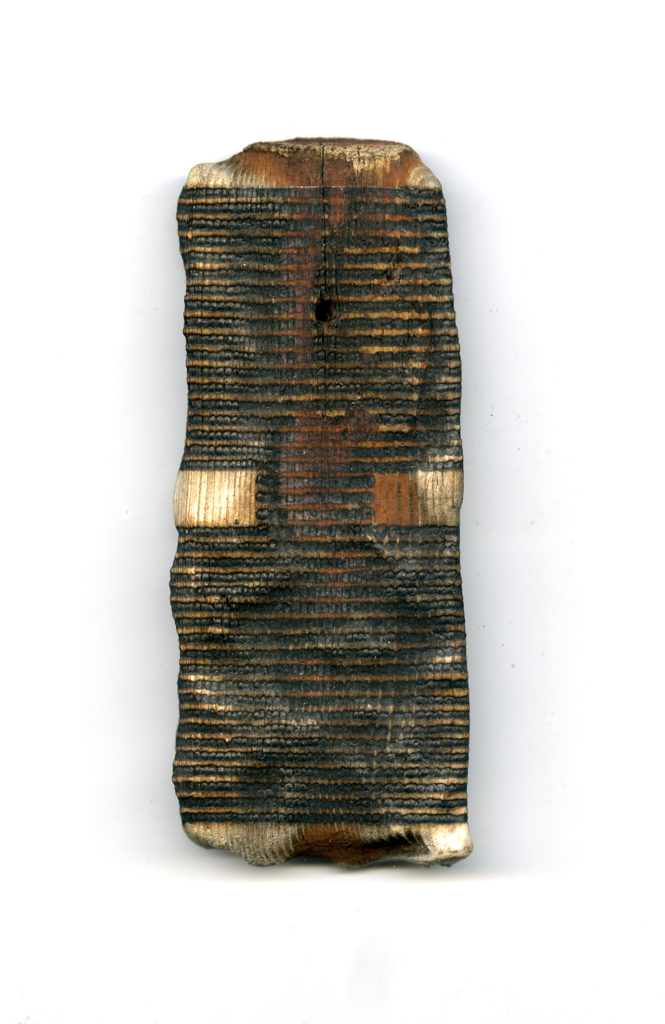
Roger Ackling (1947-2014) was an artist who adopted a very specific technique for all of his art career. —He would use a magnifying glass to draw lines using the light of the sun, he would take his time letting the sun and his surroundings have their impact on the drawings and sculptures. Often you can see in his work where the cloud cover was too thick to be able to create lines or where the shade from branches created a creak in his lines.
– his primary materials were found surfaces usually driftwood or card in a variety of sizes or shapes, sometimes using clothes pegs and picture frames in his sculptures, however he create the drawings exclusively with the sun.
– Ackling said “I usually work from left to right and against the grain. Each line is made up of many black dots. Each dot is an image of the sun.” i like the idea that the drawing catches a moment beyond what you can see, the time that goes into it and the environment that they were created in can be seen by the textures and marks on the work.
– His work helped me to think about ways i can use my environment as material and how there is much more than what i can see in a still life in front of me. I find it difficult to create a drawing from a pile of objects, i feel the need to just replicate it and im never sure how to find more interesting ways of portraying it.
-Incorporating my drawings into the environment is my next step. the way he uses only light to make the mark made me think about using shadows and highlights as the drawings themselves. i also want to use natural materials- i can find drawings that the trees have made with their branches and roots, i want to channel this into my drawings to create a connection with my subject.
 Abigail yeats CAP