| Date of activity | What was the Activity: | Where did the activity take place | What did you learn from this activity: Exhibition Planning Ways of Working Curation Application | How has activity been documented | How could you apply the learning: |
| 15/8/20 | Life Drawing; Aimee mccallum | zoom | Helped me to practice drawing again and get back into creating work. Drawing from zoom for first time | drawings | Will use the warm up for drawing in my drawing projects |
| 2/11/20 | Artist talk: Hannah Nugent | Teams | Ways of working; exploring digital spaces using animation. takes inspiration from retro video games. Celebrates the digital realm with bright colours and interesting new way of painting and drawing. | Written notes | Take inspiration from how she makes use of digital painting |
| 22/11/20 | Artist talk: Megan Rudden- Q&A- Hubcap | Instagram live | Ways of working: learned how she explores writing within an art context. How to approach personality, intimacy and comfort. Talks of making writing inclusive. Also received recommendations for books. | Written notes | Very helpful for current project, will take influence from the way she writes and how she corelates that with image making |
| 9/12/20 | Artist talk: Rhona Foster | Zoom | Ways of working: she showed us clips of her work and we learned how she put together a set and what kind of budget goes into it. Gave advice about how someone can create something of a similar level and where she applies for funding and oportunities | Written notes | Will use advice on how to make a set and what goes into it if I plan to make a scripted video |
| 5/2/21 | Screening + panel discussion: Natasha Ruwona | Zoom/Youtube | Ways of working: got to watch her new video work “umbilic” and learned about some experiences of black identities. Got lots from just watching her work as it was so interesting | Written notes | Will use her work for inspiration and for techniques with moving image work |
| Feburary 2021 | Artist Talk: Benjamin Fallon | Zoom | Ways of working: was taught the history of moving image, how far it has advanced and how many different contexts it can be used in | Written notes | Will use the information for when I explore digital and moving image and also for artist inspiration |
| March 2021 | Workshop: Neil Nodzak – Sequential art | Teams | Ways of working: Learned about how I could use sequential art for my own project. Introduced to artist aiden Koch and how she aims to create a story with as little words as possible | Written notes | Will use this for inspiration for my current project. Likely to use the skills I learned in the future |
| 10/4/21 | Artist talks: Charlotte hicks- hubcap | Instagram live | Ways of working: learned about how she portrays women in art and the female gaze. Also about how she uses textiles and women’s craft | Written notes | Could use textiles in my own work and am also interested in similar topic so might use it for inpiratiion |
| 28/4/21 | Working within visual arts organisation | Discord | Learned about a variety of jobs within arts organisations such as galleries, workshops, programmes. Also about where I would be able to find jobs and what kind of experience and qualifications needed | Notes on blog | Will help me to figure out what options I have once I have left this course |
| 28/4/21 | Participatory arts withing the community | Discord | Learned about the organisation “Artlink” and how they work with kids elderly and disabled people. Introduce people to art and crafts and help people to enjoy and learn from new activities | Notes on blog | An organisation I could possible volunteer with for experience as im interesting in accessible art |
| 28/4/21 | Freelancing- planning for creative life and career | Discord | Received some advice on creative jobs and how to work up to them. Also about how to plan out a career that Is suited to me | Notes on blog | Will use the advice to help decide what jobs I will go for |
studio projects
Resolved Artwork + Evaluation


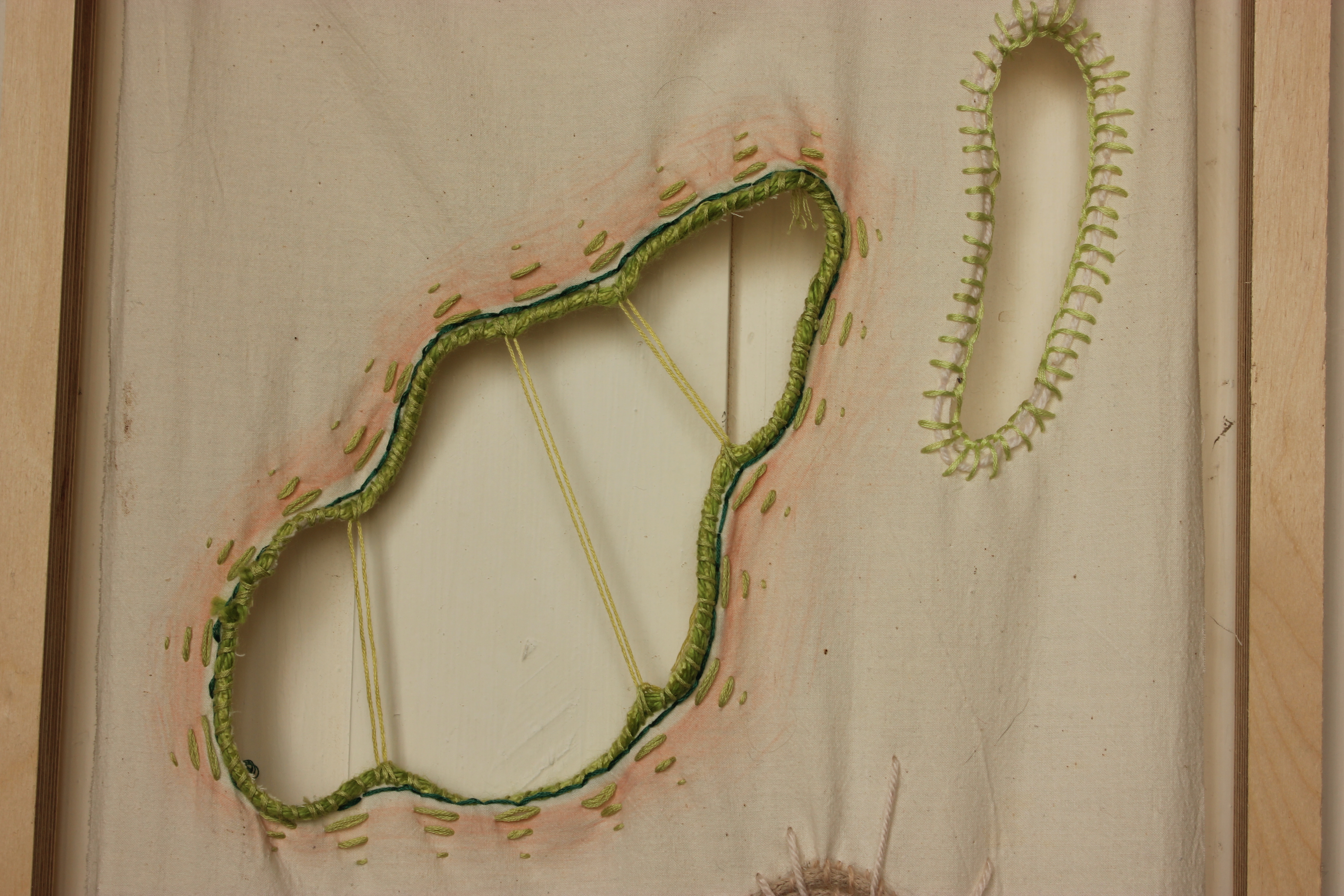
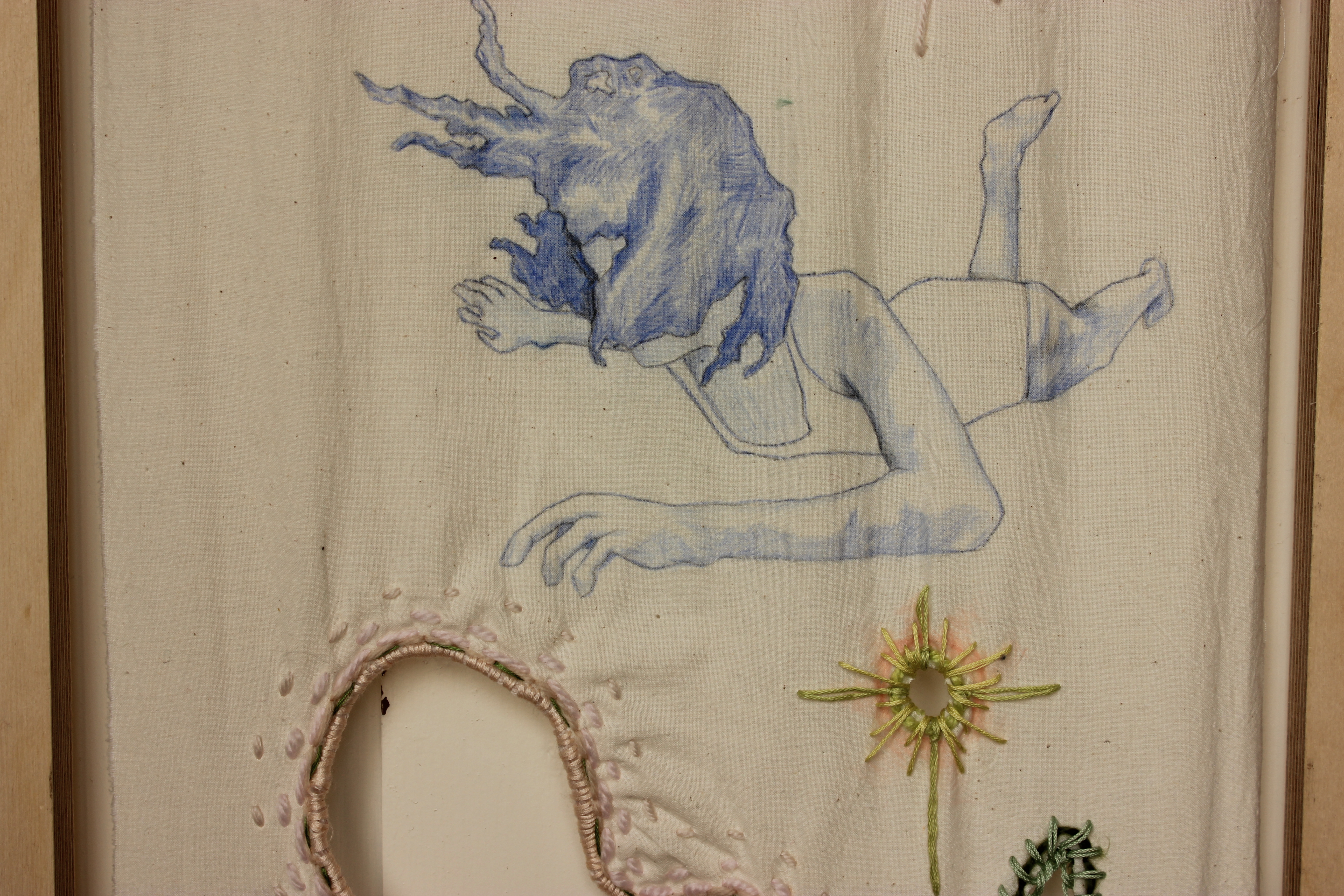
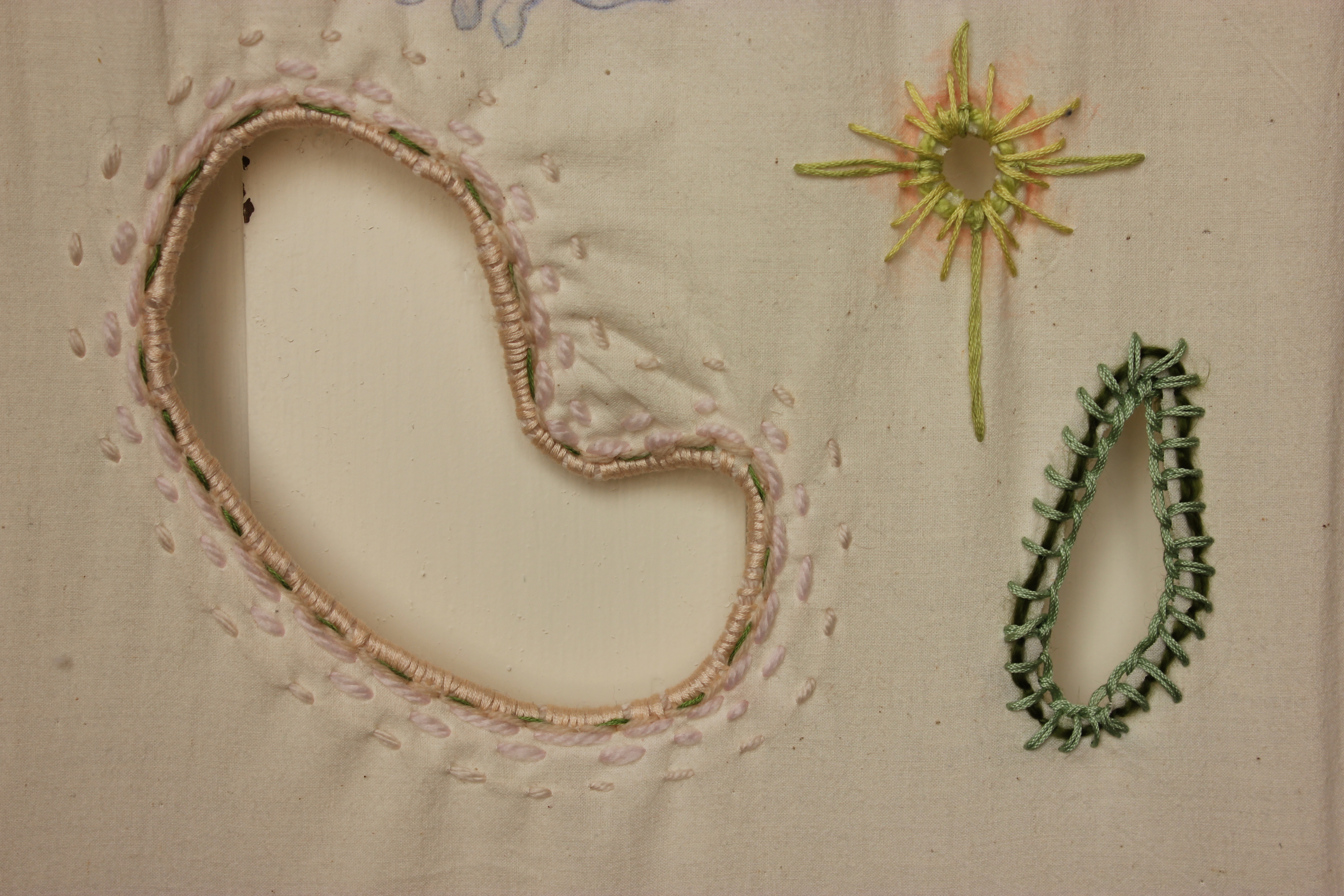
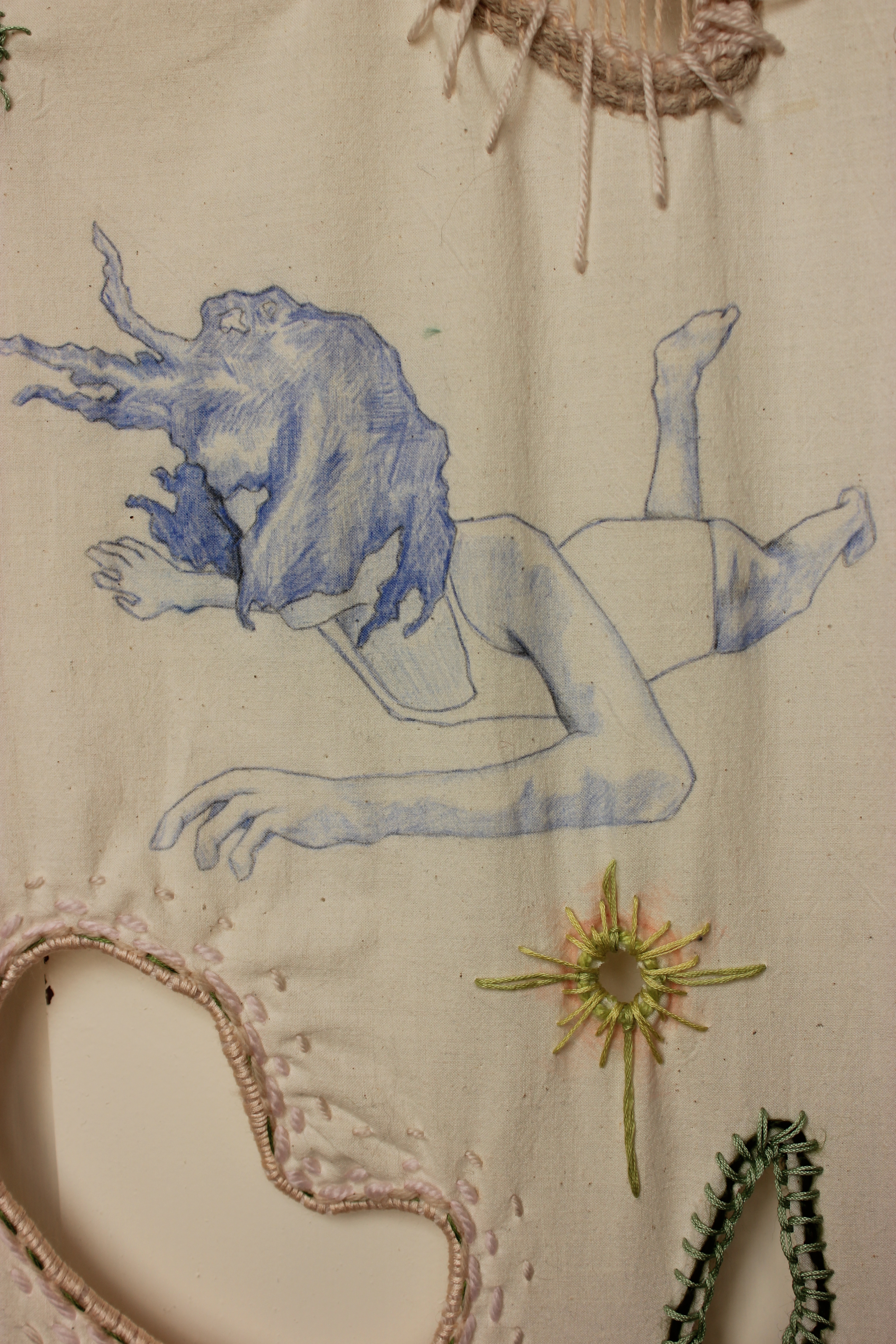
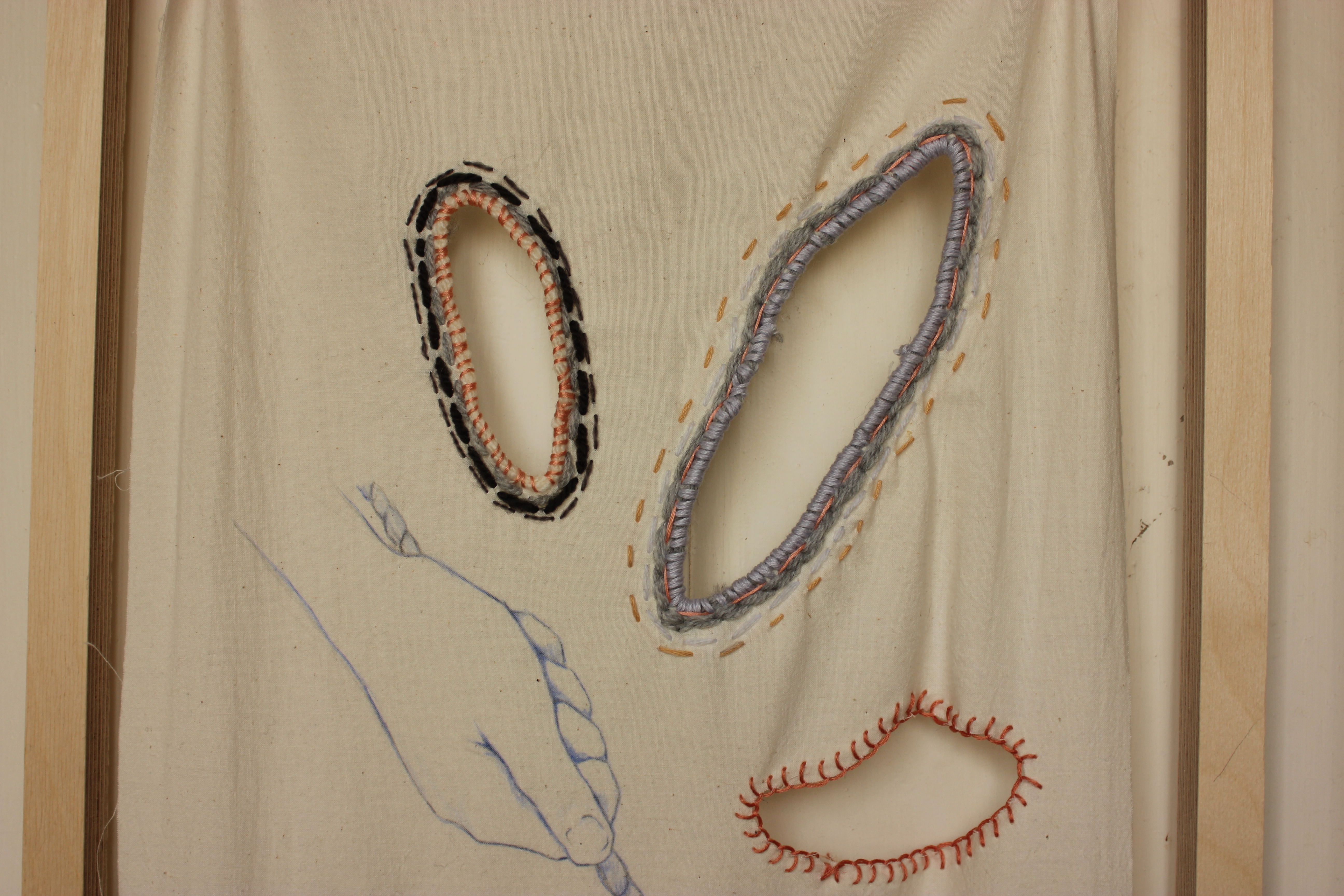
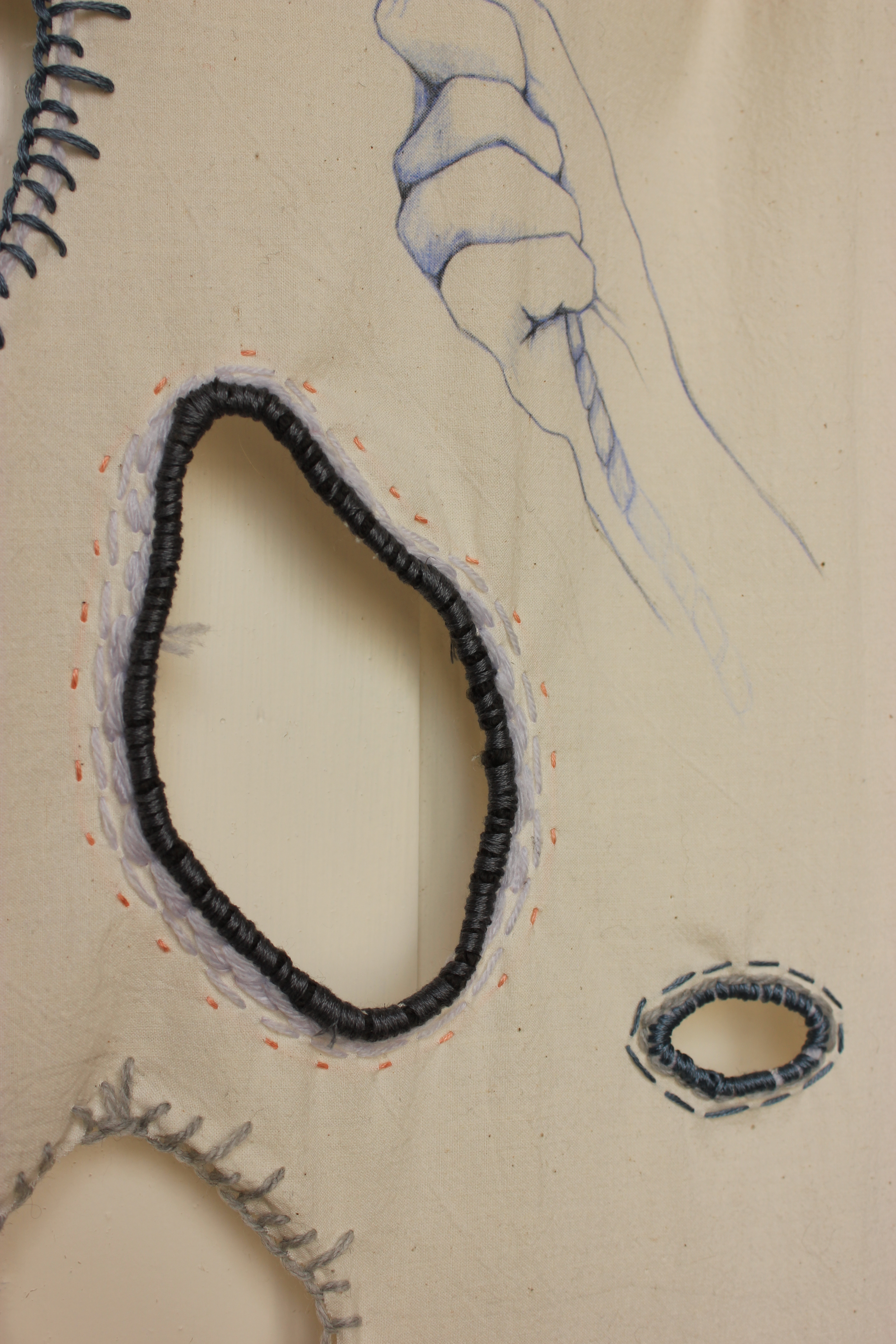
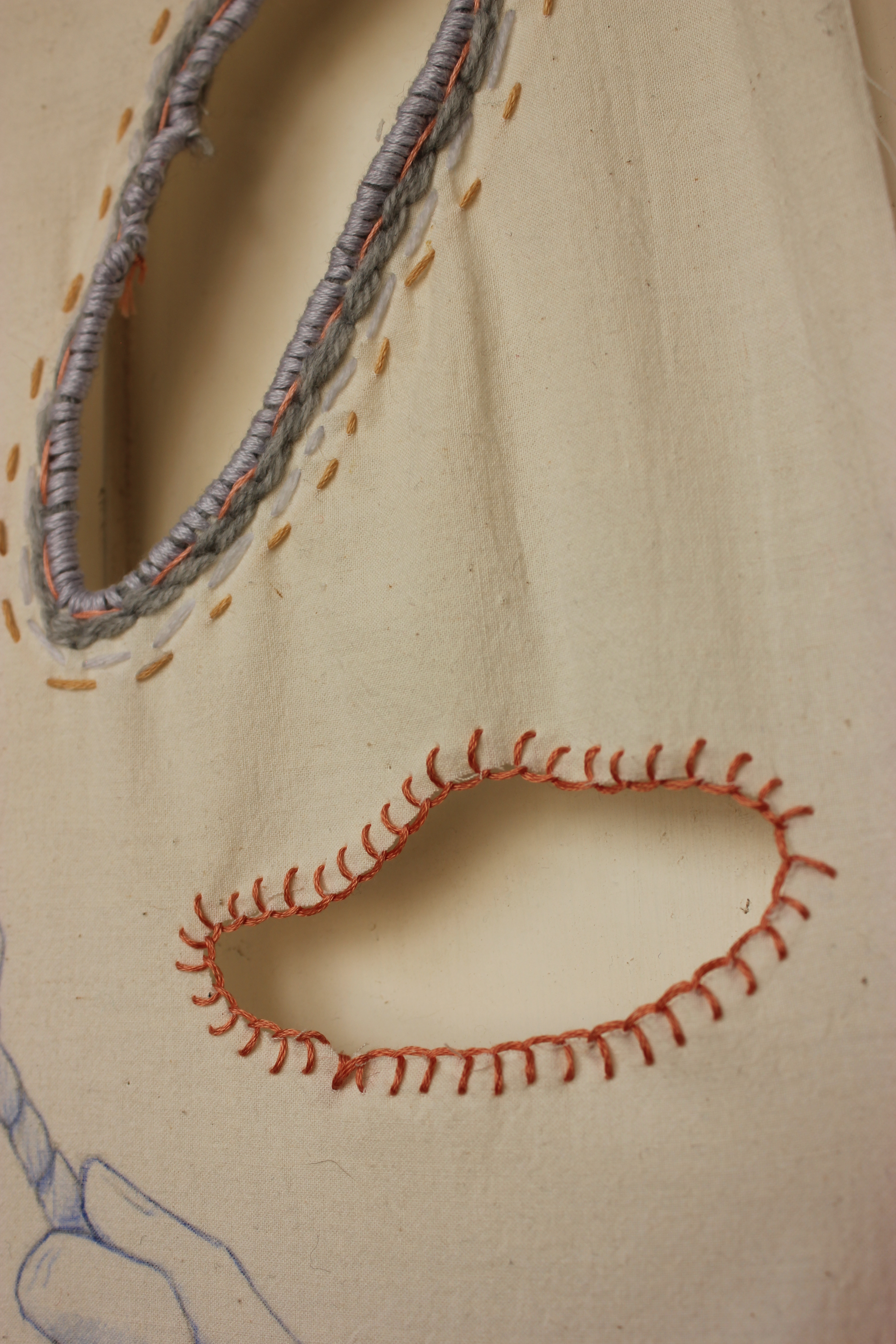
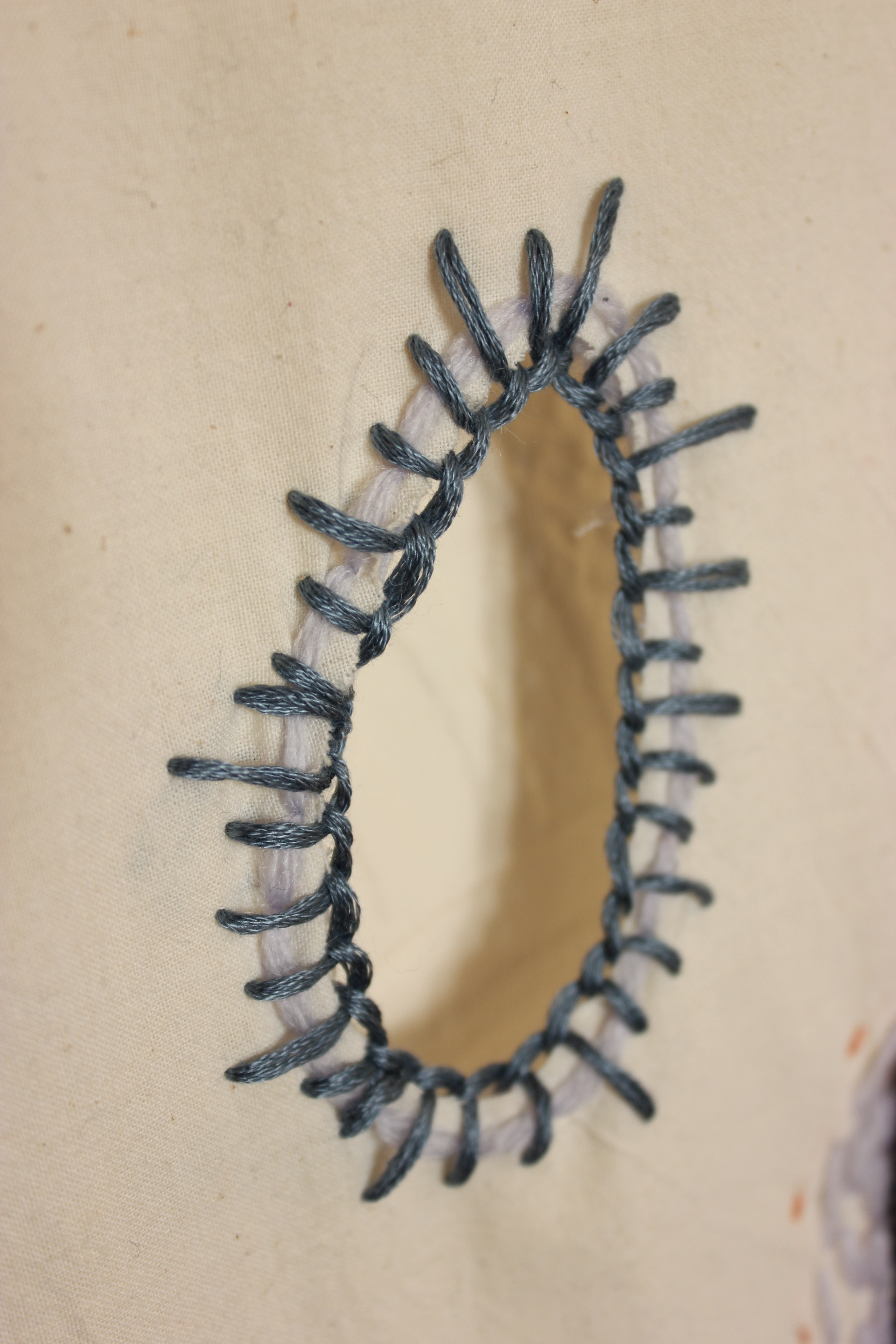
Evaluation
My original aim for this final project was to explore the dichotomy between receiving nurture and lacking it. This was a natural progression of focus for me from previous projects as i kept relating back to the topic of care. This theme was so closely relevant for my own personal life as at the time i was moving out of my family home and experiencing all the motions that come with detaching from something that was the source of so many difficulties. I was worried going into this project about how i would handle the sensitivities that come with it and how easily i would be able to produce work without getting too caught up. It proved to be quite a challenge, even though i aimed to approach with a lighthearted intention and positivity, i found that i was constantly battling between avoiding getting too personal or letting my feelings guide me through it. I wanted to keep the discussion of my family relationships vague but my complicated relationship with my mother kept reappearing. Half way through the project i had to accept that this was the only thing on my mind and reevaluate how i would deal with this. I found it very helpful to look at other artists, such as Mary kelly, that deal with this topic. Seeing how she could document the relationship with her son in very analytical ways made me think about how i can use my situation as a tool to explore the original theme of nurture. At this point i also attended Neil nodzaks workshop on Sequential artwork, this was a key turning point for me. Being introduced to the artist Aiden Koch helped me realise how much i love portraying a story and showed me ways that it was possible to do so within a contemporary art context. Nearing the end of this project i was able to enjoy creating work more and my theme took the back pedal for a while whilst i let myself play around with sequential work. This was an important moment as it allowed me to realise the theme didn’t need to be so specific and broadening it to be simply “Nurture” gave opportunity for a more visually and conceptually explorative project.
Ive experimented with a fairly wide variety of mediums, beginning with clay and moving through drawing onto textiles. I think that it has helped to decide that textiles was the strongest medium to produce my final work in because of its relevant connotations. However, i wish i had expanded the area of imagery i explored sooner as i felt that towards the end i was discovering richer sources like healing plants and milk. This would have allowed me to really delve into what worked and be more confident that my work was coherent. Another regret is that i didn’t leave enough time to fully explore the video work i produced, i really liked making the video were i stung myself with nettles and heal them with dock leaves. During the final crit, my peers all picked up on how it was strong imagery and directly connected to care/self care. It also had distinct connections with my mother because of her career with plants and the knowledge she passed to me. In hindsight, i was at a point in the project were i had to make a decision between two areas to develop and combining them would have felt too haphazard. Had i realised this work earlier i think that it could have produced something quite interesting, however, the sequential work had come quite far already so i think it was a good decision to go with it. My processes and techniques were a bit confused and nothing felt right or that interesting until i realised how sequential work was relevant for my project. After this i saw that i could bring in my own experience through writing and found out about the connection between text, textiles, weaving and storytelling. Everything began to fit together and make sense so my focus and interest returned. I found that i would be able to utilise the techniques i learnt from weaving in early experiments whilst also thinking about how i can tell a story through the final work.
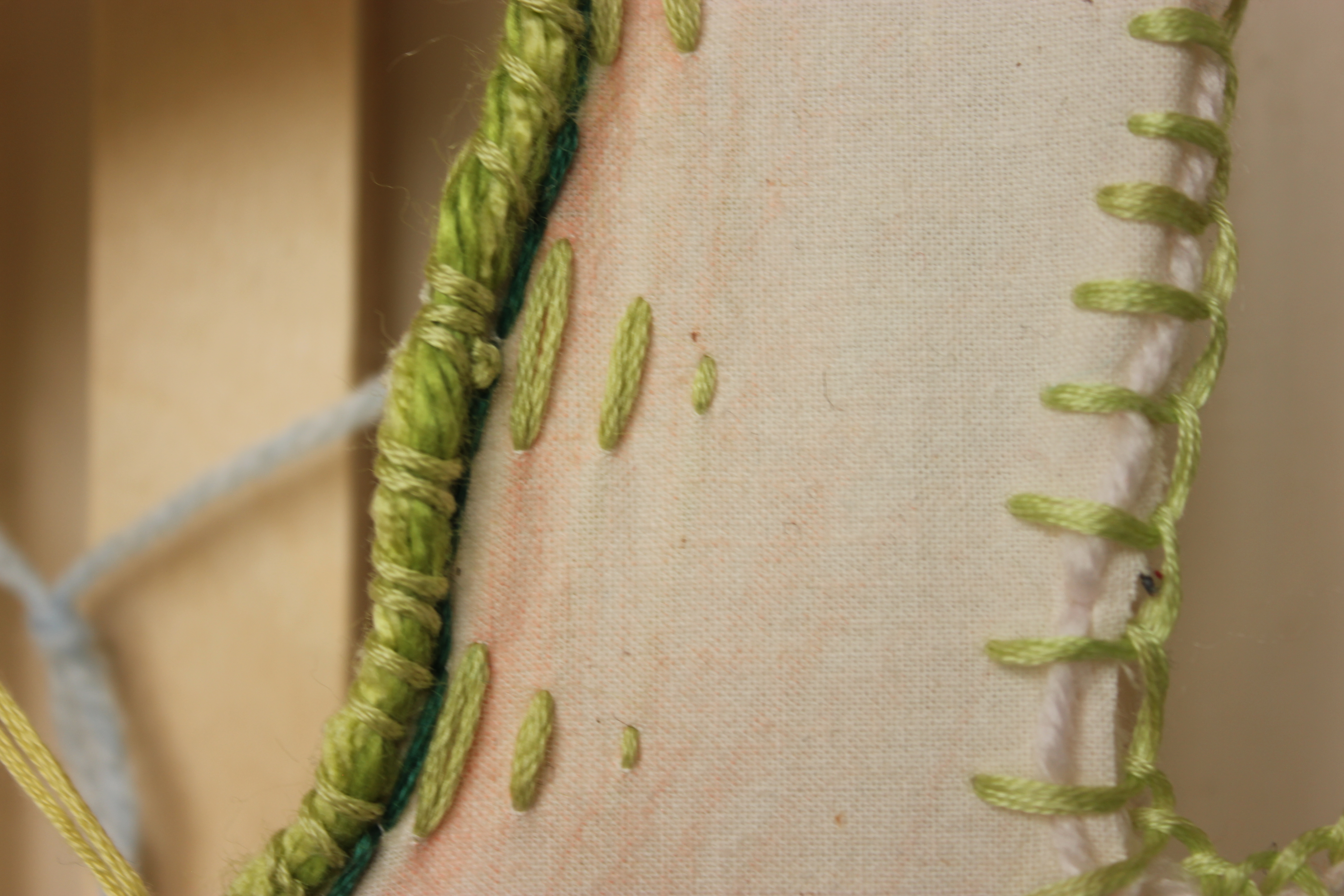
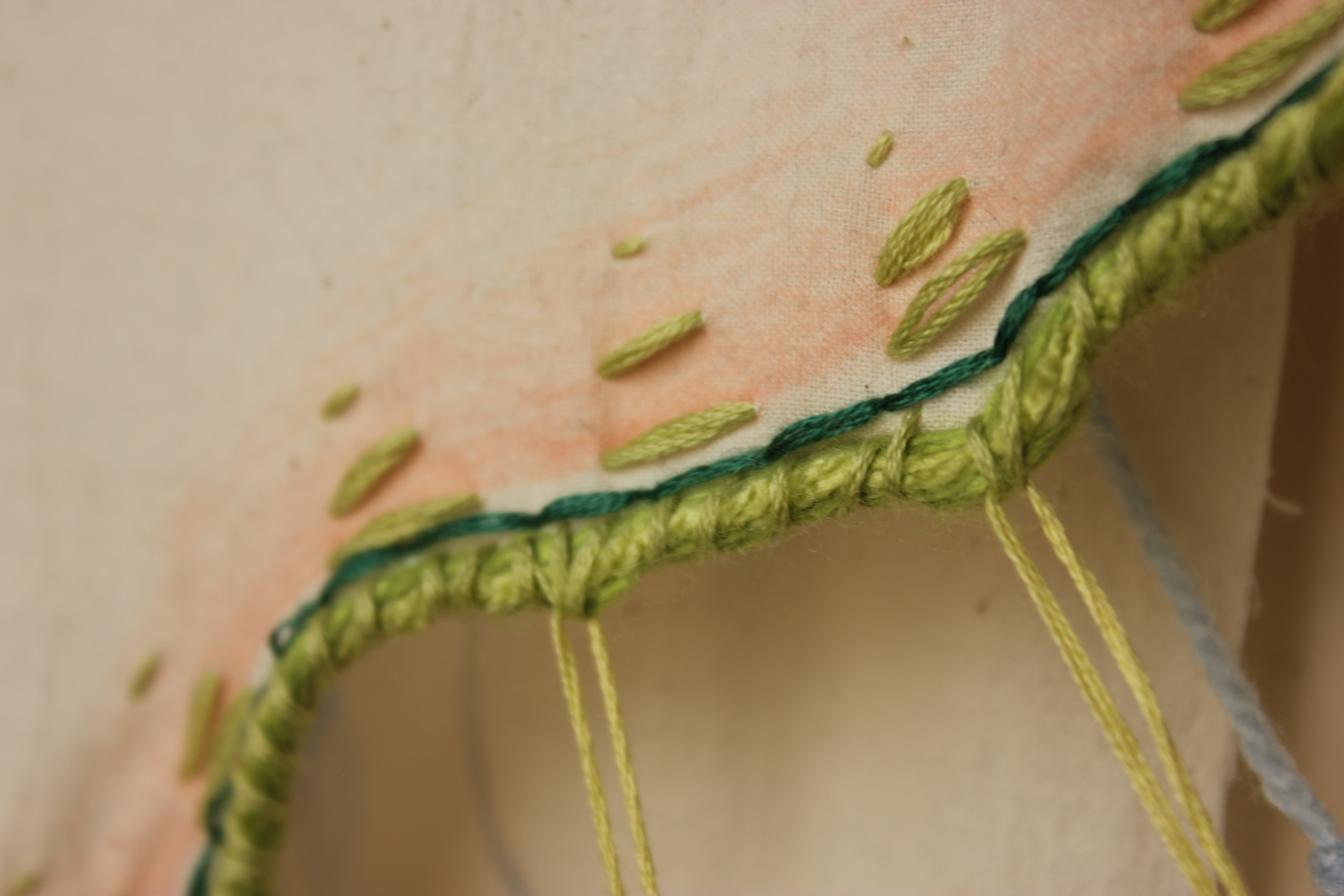
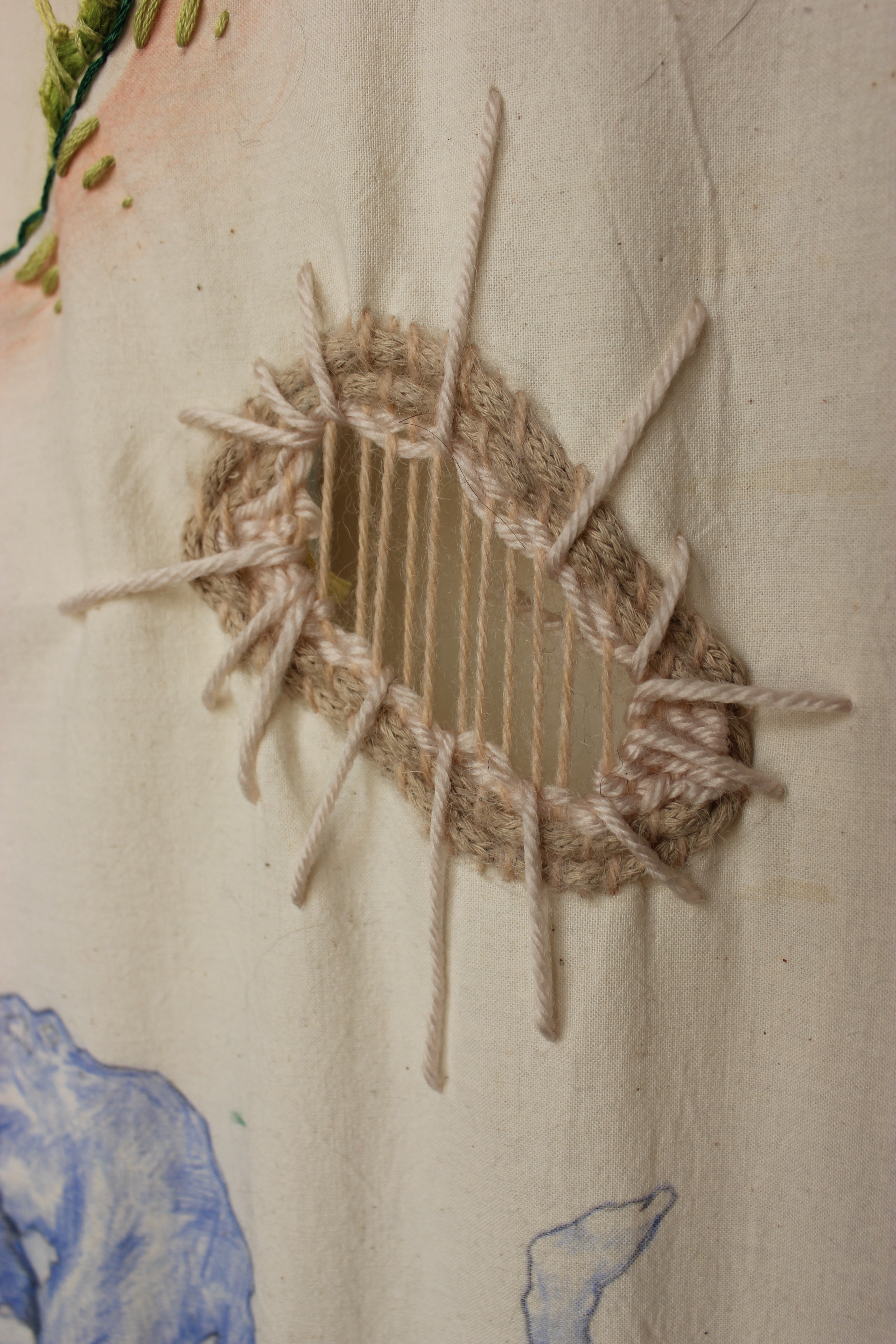
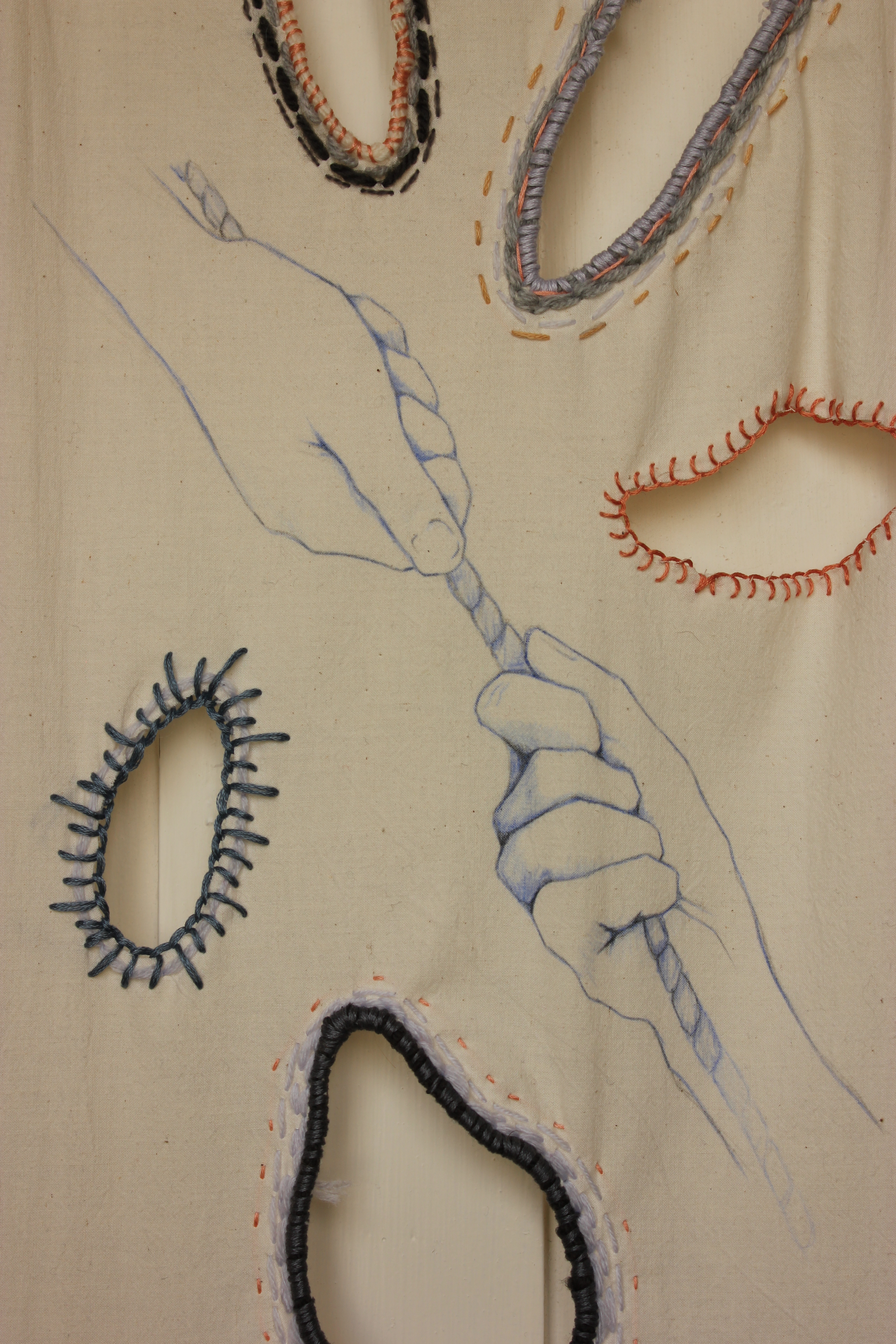
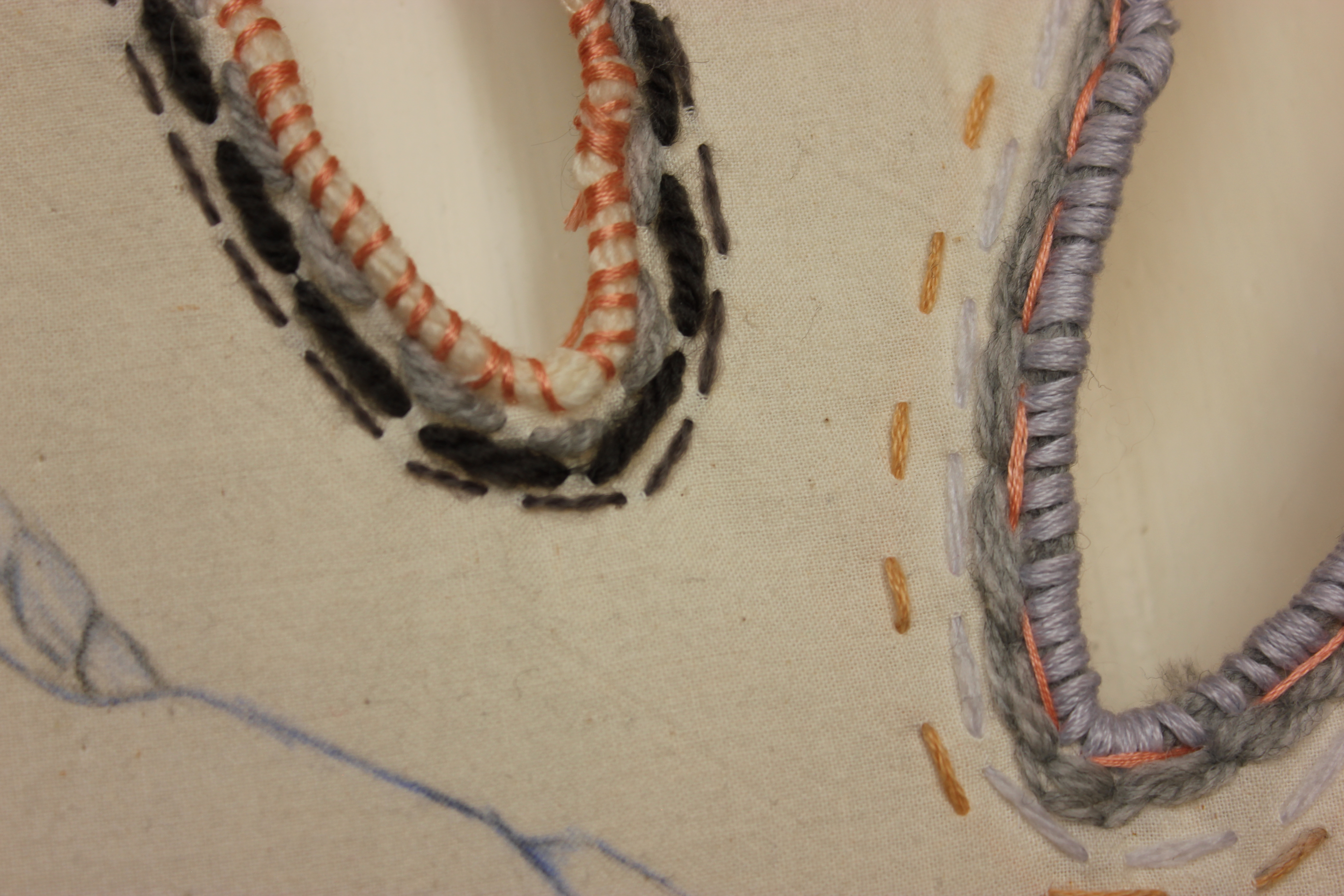
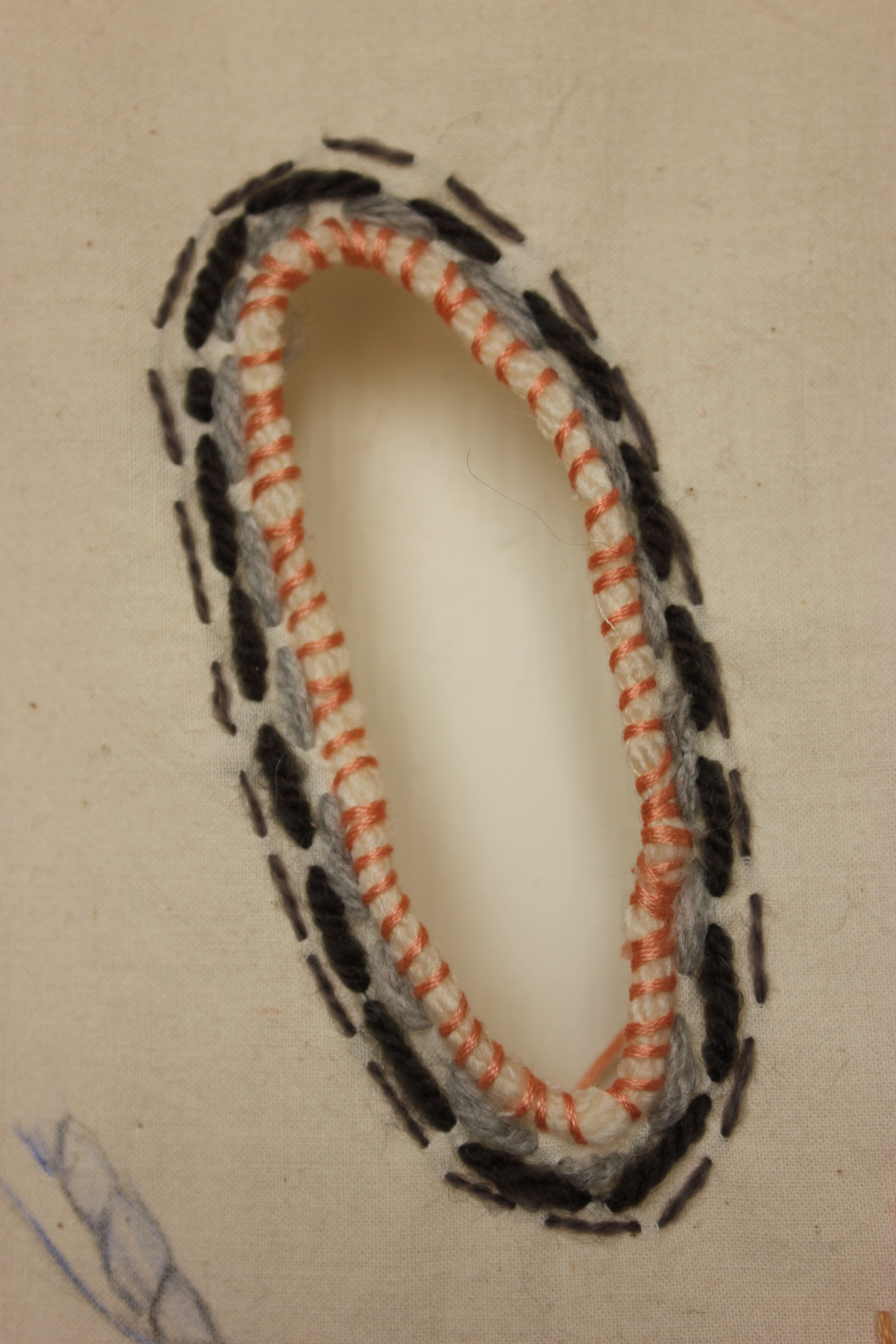
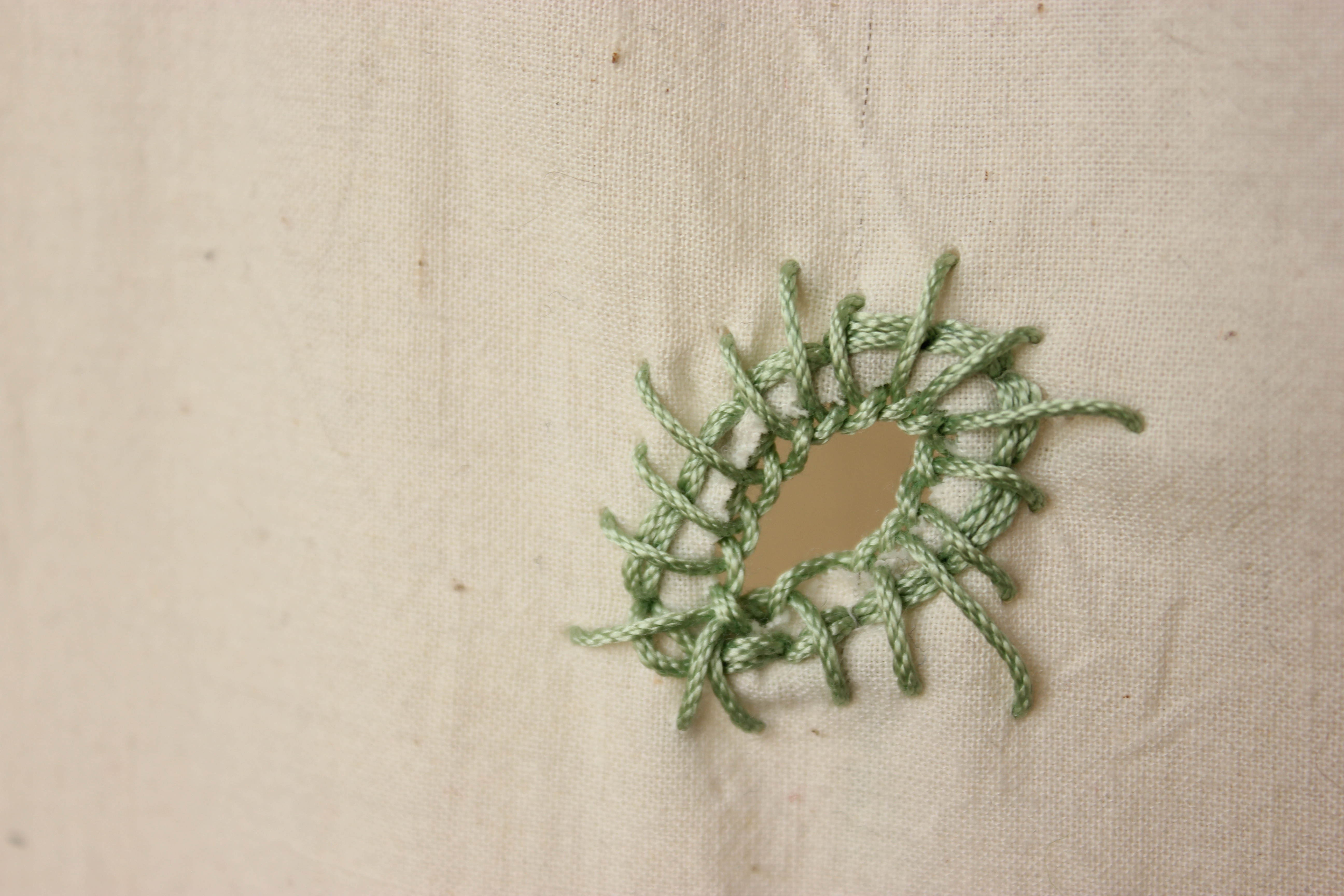
The resolved piece is a continuation from my previous sequential work. I found myself writing down memories in a structure similar to a poem these seemed like the perfect thing to translate into a sequence. This particular one explores two different interactions with my mother, in both of which we are in the sea. Water is something that i have always related to care so this piece of writing felt particularly relevant. In the first memory we are snorkeling and we come to the edge of the reef, my mum senses my fear, brings me to safety and swims away whilst i wait for her. In the second, it is late and i am in the water whilst my mum tells me to get out, in a moment of resistance i submerge myself in the water to seek refuge, in this moment i feel safe and nurtured. I chose this writing for the base of my final work as it talks about self nurture and moments where my mum is present and absent in these moments of care. I was inspired by Aiden kochs work to see how i could convey a story with as little language as possible, which resulted in two drawings each with only four words- “safety in her presence” and “suckle in her absence”. I struggled to know whether these works were clear enough or show my theme well enough but after a 1-1 i realised that they didn’t need to read out my specific story exactly because a viewer could understand by looking at them that they tell a story of care. This lead me to leave out the words in my final piece as i felt they were trying to explain itself too much and weren’t right for it. Instead of fully weaving the work i decided to make it from a piece of fabric stretched over a frame as i wanted to include drawing, i felt to tell the story i had to involve the image of a hand holding a rope for safety and a person falling/swimming in water. I feel that these images next to each other are quite strong and i like how i have merged them with the textiles. However, i feel that i could have managed the fabric differently, i like the frame because of its nod to the structure of a basic loom, but i feel that i could have incorporated weaving more. The embroidery comes across too delicate and would have liked to cover the whole canvas in hindsight. This was partly a time management issue, with the holidays and strikes i completely lost my motivation so in the last few weeks i had to really push myself to make up for lost time.
Overall i think that the result is successful, the gaps in the fabric is something that i have maintained throughout all my textile work and i feel that this manages to discuss the complications and missing parts of a difficult parental relationship. The idea of sequential work is not where i thought this project would go but im really happy that i was introduced to it as i can see my work going forward into this process.
Final Crit- Notes and Reflection


Notes from peers:
-sequential work:
strong visual/formal elements
good connection to personal experience
strong composition
-“tender” piece could be brought forward and spent more time- play on words could be something to carry forward
-Teeth imagery- has a strong link to the development of a child- could continue the idea of something missing or bring it back to sequence
-Most recent sequential work- coherent of all the work ive done combined- need to think of bringing it together for a resolved piece
-think about using stills for some textile work, could just use imagery of nettles and dock leaves, or perhaps just the spikes.
-work seems like it has the intention to speak to audience, like a way of communicating a story
– if i am trying to communicate a story it doesn’t have to be direct or obvious, leaving room for viewer interpretation is ok.
Personal notes from feedback:
-Healing properties of plants is a strong path to explore
– Reminds brooke of mud pies/ potions could involve the aspect of child play being a source of nurture.; look into shona mcnaughton “we nurture” performance
-Storytelling is a good way to round up the project
-the use of plants strong because of the connection to my mother; passed down knowledge
-because lacking in materials i could treat fabric and paper in the same way for development
– the connection with text and textile is an important realisation to tie the project together
-it might not obviously tell my own story directly but with the use of imagery it can tell a story of nurture that people might relate to
– there is such a vast breadth of language that i can make use of, can easily adapt to each viewer
– doesnt have to communicate exactly or reduce it to only my experience- you can see just by looking that the theme deals with the idea of care
Healing + Harming Plants

From my previous writings and drawings i used aloe vera as imagery to play with the idea of care and soothing; i decided to see if i could use the actual plant in any way. Extracting the aloe vera from the plant was quite a therapeutic process and the jelly inside felt cooling. Although i liked the process of it i don’t know how i would actually use the plant in my work as it just drys out.


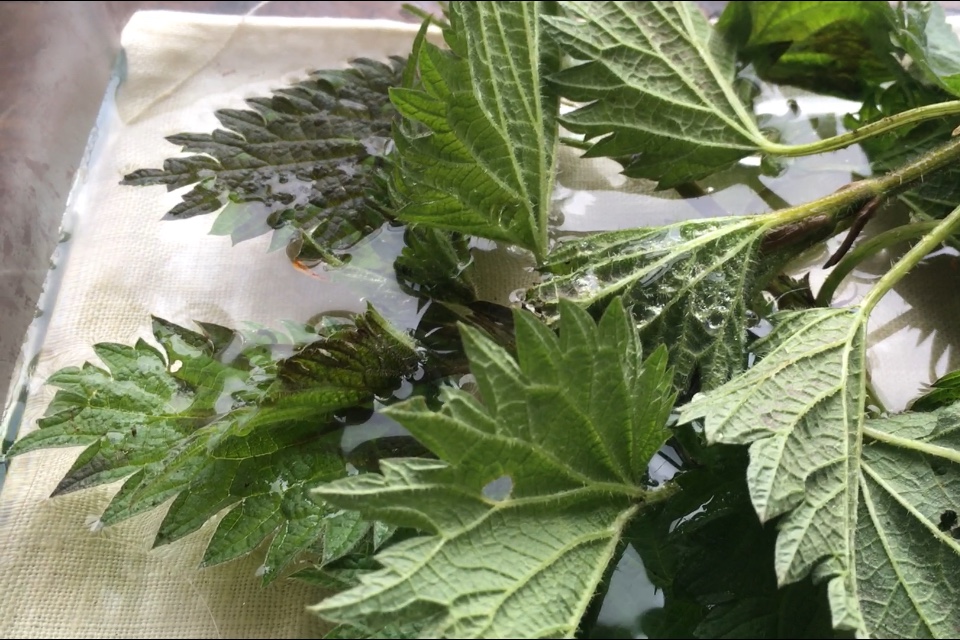
The failed aloe vera extraction along with a book of essays “on care” made me think about my mums connection with plants. She has worked at the botanic gardens growing ferns and gingers since i was very young and taught me everything i know about plants. Although i have forgotten a lot of the information she gave me i will always remember the harmful and the healing plants. I have distinct memories of coming home covered in nettle stings from the woods behind my house and using dock leaves to help the itching. i recreated this for a video (stills below). I like how this brings up a story that most people could relate to from their childhood, there is something very simple and pure about tending to a nettle sting.


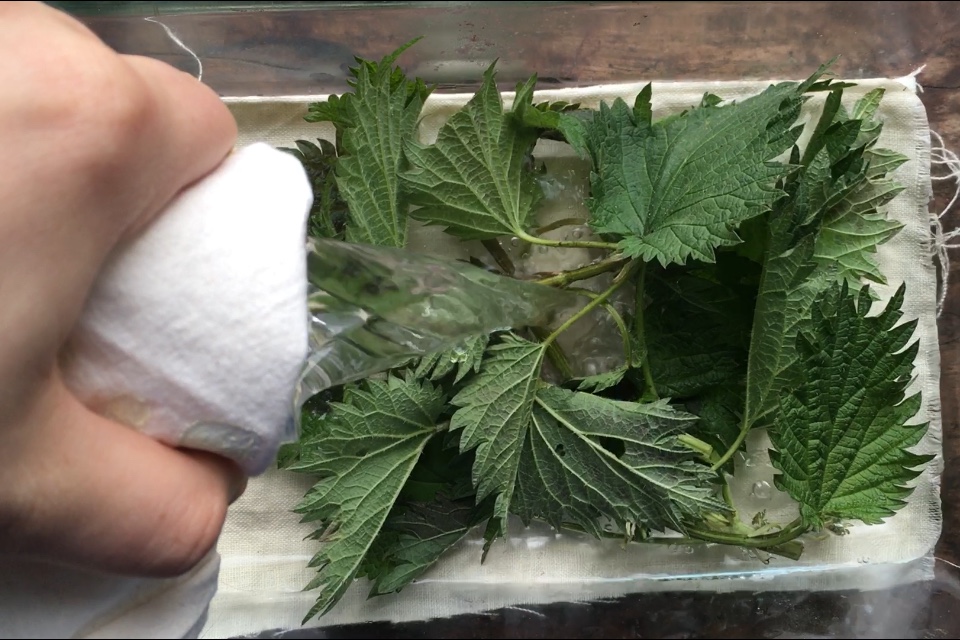
I also started to think at how when you heat nettles with hot water it removes its sting and can be transformed into something healing. Nettle tea is known historically for treating pain as well as having many other benefits such as reducing inflammation, contains lots of nutrients, treating high blood pressure and even has been used to keep roman soldiers warm. I tried to weave with it and also see what i could do with the soaked leaves. i don’t think any of this looks that interesting but i have thought about how i could use the nettle to stain material so i think this is the next step to try. i also think that the leaves look really interesting in themselves so i might just draw them to be included in the sequential work.



Celia Pym

Born 1978, Celia Pym is a contemporary artist that uses textile as a way to explore a mending technique. she studied sculpture at Harvard and went on to gain an MA in constructed textiles at the royal college of art, London. Later in her early 30’s she went on to train as a nurse, which is something you can see leach into her art; the exploration of care is an important factor of her work. Her mending work began when she inherited a jumper worn by her uncle, an artist who had just passed away, the sleeves had completely worn through in places where he had leaned on his arms to create his work. She saw this as a really important part of his history and it was documented by something physical leftover, instead of trying to hide the holes she mended them with a contrast colour of wool to highlight and preserve his own unique movement and use of the jumper. Whilst doing this she noticed darning that her aunt had done to salvage this jumper before she had passed away; pym saw how a piece of fabric could hold so much presence and personality of people. Along with this she realised the care that goes into tending to it, looking after something for such a long period of time suggest it is an object that is well loved.


From this initial realisation came a project called “the catalogue of holes” beginning in 2007. She invites people to bring garments to her and they discuss the story behind it and what the best way to mend it would be. This interaction also builds another relationship into the story as she is the one mending it; it feels like an act of remembrance for the time passed since the fabric was new. she talks about how “Darning is small acts of care and paying attention. The damage, in a way, does the work for me” she goes on “I respond to it. The mending is slow work to hold the damage in place.”


Alongside these mending works is a large collection of work that explores collage-like versions of her main focus. They look at reusing found materials, colour, form and negative space. Even though this work is quite different you can still witness the care at the centre point of her theme. Using textile as a medium invites touch, it shows that the work is made to be a second skin of someone or at least an item to interact with the body. The tenderness of touch is a key factor of her theme, i think this is what inspires me. The way she looks at interpersonal relationships is really special and honours areas of imperfection. The contrast between damage and healing is something i hadn’t thought about before and id like to find ways to explore this in my own work, perhaps by finding my own way to mend gaps in my sequential work.
Mary kelly

Conceptual artist, feminist, educator and writer. Kelly, born 1942 in iowa, is recognised for her rich contributions towards the artistic exploration of feminism and postmodernism.


One of her most notable works is “Post-Partum Document” in which she creates a documentation of the relationship and shared experience between her and her child for their first 6 years since birth. It came at a time where artists were starting to explore what it means to be a women in contemporary art by reclaiming their bodies through performance or learning about and drawing attention to previously ignored women. Kelly wanted to look at the often hidden experience of day to day when bringing up a child. She does this in a variety of different ways, using associated materials like nappies and clothes, writing in depth analysis of interactions, collecting drawings and writings from him. She also explored the transitions she went through in relation to the child’s experience by documenting her internal thoughts and how she adapts alongside the birth and growth of the child.
This documentation creates a narrative over a period of a mother’s life that isn’t often seen from the outside. Unlike most other artworks, there is a story built up over time that cant be undone or rubbed out because the subject is her son; everything that he experiences will create him as a person, being able to study this in detail is something that is very rare. You can see from her writing that she is figuring things out for herself as she goes along whilst also experiencing the judgement and opinions of others. The use of dirty nappies in her work is something that changed the level of exposure to motherhood that art critics had seen previously, the shock factor perhaps was key in forming a space to discuss mother and child in depth.
Im really interested in kellys use of material, collecting bits of evidence from this relationship and altering it to sum up an interaction and key moment. I think i have started doing this in my own work by selecting important imagery that sparks a vivid memory or association. i also think that fact that its a large series of work is important to the fact that she is telling a story; it is hard to sum up something of that significance with one work. i can see this is perhaps true for my work too, it will help to explore ways in which i can create a narrative that acknowledges the many moving parts of a mother daughter relationship.
Weaving + Storytelling + women

“‘Spinning a yarn’, ‘weaving tales’, or ‘plot threads’: these familiar expressions all hint at a long-lasting metaphorical connection between storytelling and cloth-making. The English words ‘text’ and ‘textile’ even have a shared origin in the Latin word texere, ‘to weave’. Ancient Greek and Roman writers too saw connections between the crafts of fabric creation and composing poetry. Yet, despite this emphasis on the links between storytelling and weaving, in the ancient sources these two types of activity were often sharply divided along gendered lines.”- Dr Emma Bridges (https://london.ac.uk/news-and-opinion/leading-women/arachne-craftivism-weaving-womens-stories)
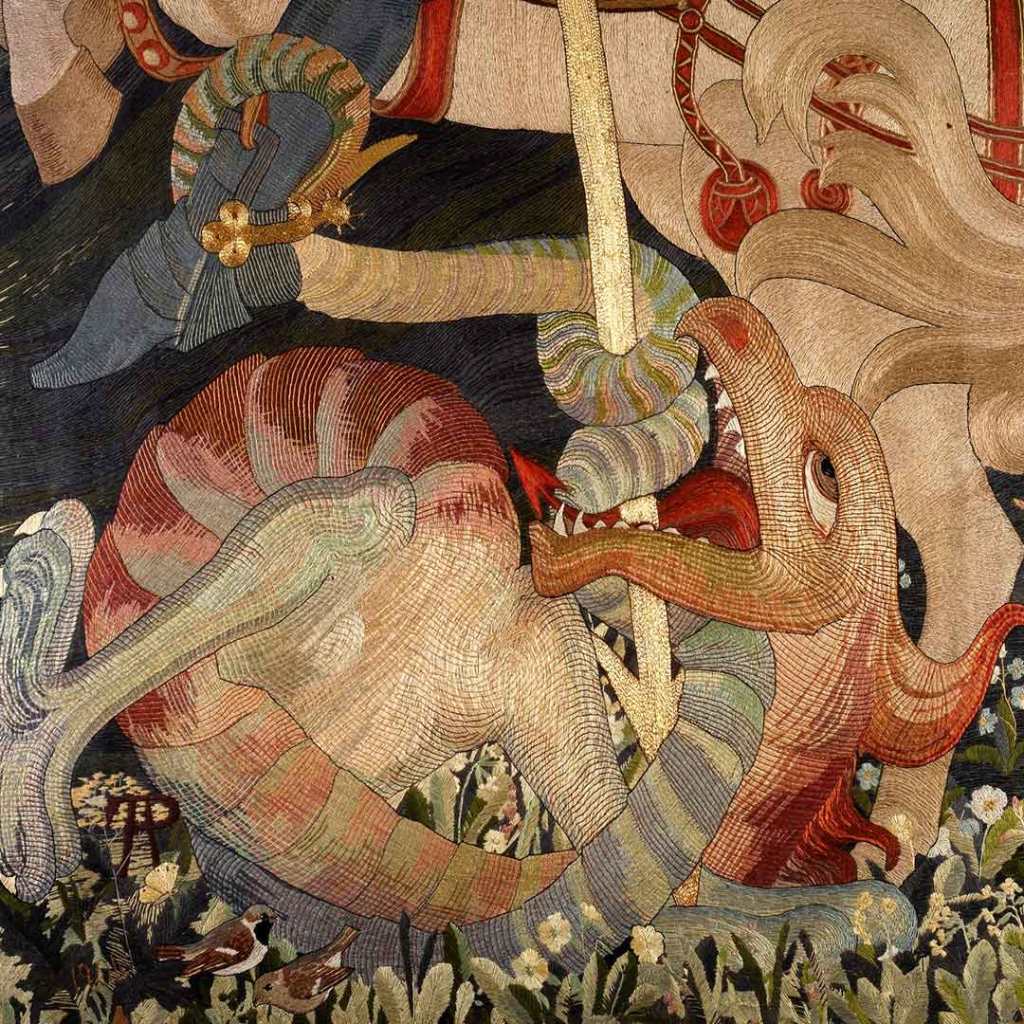

After the sequential art workshop i have started to realise the links that it has to my theme. The idea of nurture/care being a straightforward ‘give and receive’ act does not always fit with a mother child bond. In my experience like a story it has had many ups and downs along with contradictions. Thinking about the idea of nurture as a story filled with gaps has helped me to explore the inconsistency that comes with it.
looking into the history of weaving it is interesting to see how it has always been the work of women and indirectly documented their stories in contrast to the typically written texts of men. I think this holds a really strong link for me personally, being told by mostly male teachers that my writing is not good and lacks structure or clarity, i have returned to the crafts i learnt from my mother as a child. It feels often that the voices of women are not celebrated enough for the solidity of text. Although things aren’t quite the same now, I can really appreciate how the creation of cloth can in some ways communicate that experience. I am reminded of ‘Arachne’ in greek mythology, a young weaver confident in her skill so much that she is turned into a spider by athena for boasting that she is better. And the works of louise bourgeois, also portraying her mother as a spider, a creature so often connected with evil whilst also being so skilled and well equipped to weave a nest for their young and consume the male in search of nutrition. And another story of Penelope, Odysseus’s wife, who is often written about sitting next to her loom or unravelling her weaving in devotion to her husband. I find it interesting that the women in these stories are celebrated for the virtuous nature or devotion to men and then punished for being too loud or too skilled.
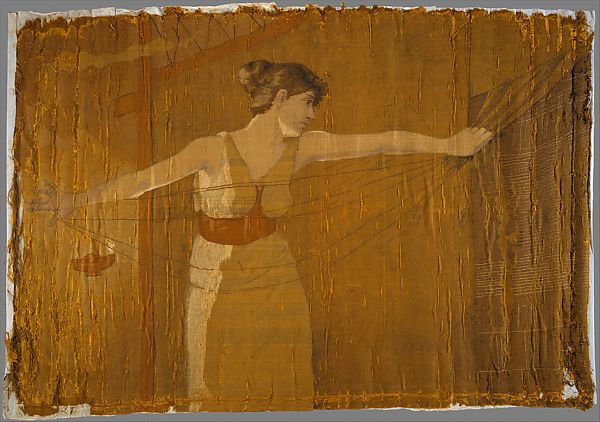
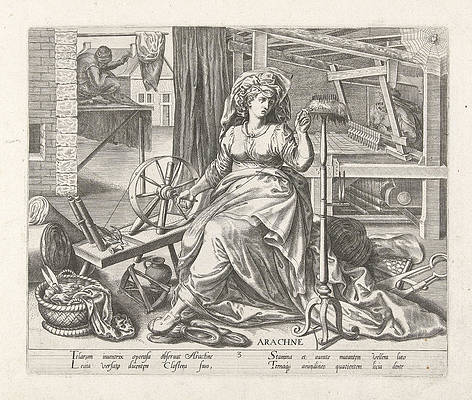
I have started to combine text and fabric work and have realised now how it connects to storytelling. when i think about storytelling i think about how its purpose is to create a perfect scenario, where each character has an intention, and at the end a lesson is formed. The process of writing a story is not that different to weaving cloth, i will keep this in mind whilst making more work to see if this might effect the combination of forming imagery and involving text.
Moving forward to 1919, the bauhaus was created with the intention to hold equal places for men and women within art. However, this did not become the case and reinforced the typical roles of gender, often the woman approaching the institution were not accepted into any program other than the textile workshops. This didn’t hold them back, the result was a total reinvention of how materials can be used. They brought skills typically referred to as women’s work into the fine art world, exploring new forms and techniques.
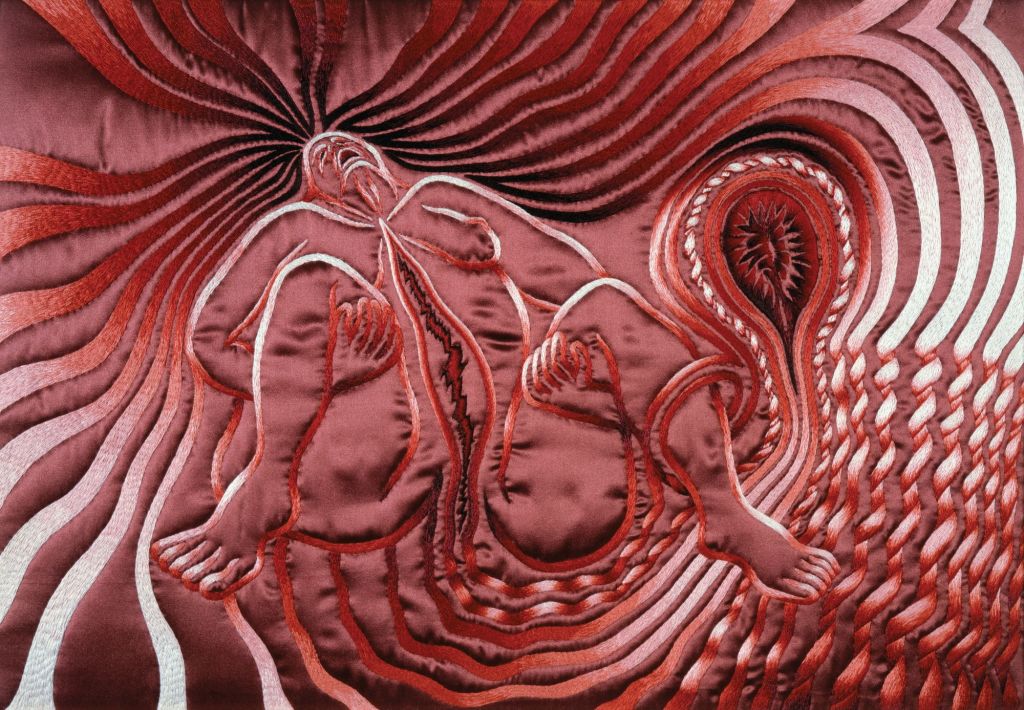
In more recent years contemporary women artist are reclaiming the loom to challenge what was expected of them for so long. Artists such as Judy Chicago and Erin M Riley are creating bold depictions of a women’s experience from childbirth to body hair. I think through the making of textile over time you would be able to see the slow arising but important victories of women’s freedom. Ive started to realise that maybe my project is more to do with a mother daughter relationship than i had hoped but i feel that this medium could be a really important one to utilise considering the ongoing connection with female experience.

Studio practice 2- Post Mid Crit

After Neil Nodzak sequential art workshop, i started to look into how i could use the information i learned in this project. I have lots of written work and as im exploring the topic of childhood my writing has been mostly memories and stories in poem like forms. i wanted to see how i could translate this into sequential works. Initially i took the approach i saw in aiden koch’s work, using as little words as possible to convey as much as possible. i liked breaking down each piece of writing to see what stood out, using imagery like teeth, ladders and rotten apples all felt still relevant to the theme whilst also breaking down a story/memory. ive been struggling to portray what i need to but after a 1-1 ive realised that even though the direct story or explanation might not be obvious, when you look at each peace you can see care and nurture just by the feeling of it and the colours textures.
Moving on from the sequential drawings i have started to see how i could use the same techniques but on fabric to tie back into the previous weavings. The continuation of negative space/ gaps i think helps to highlight the idea of imperfection or a lacking of something.


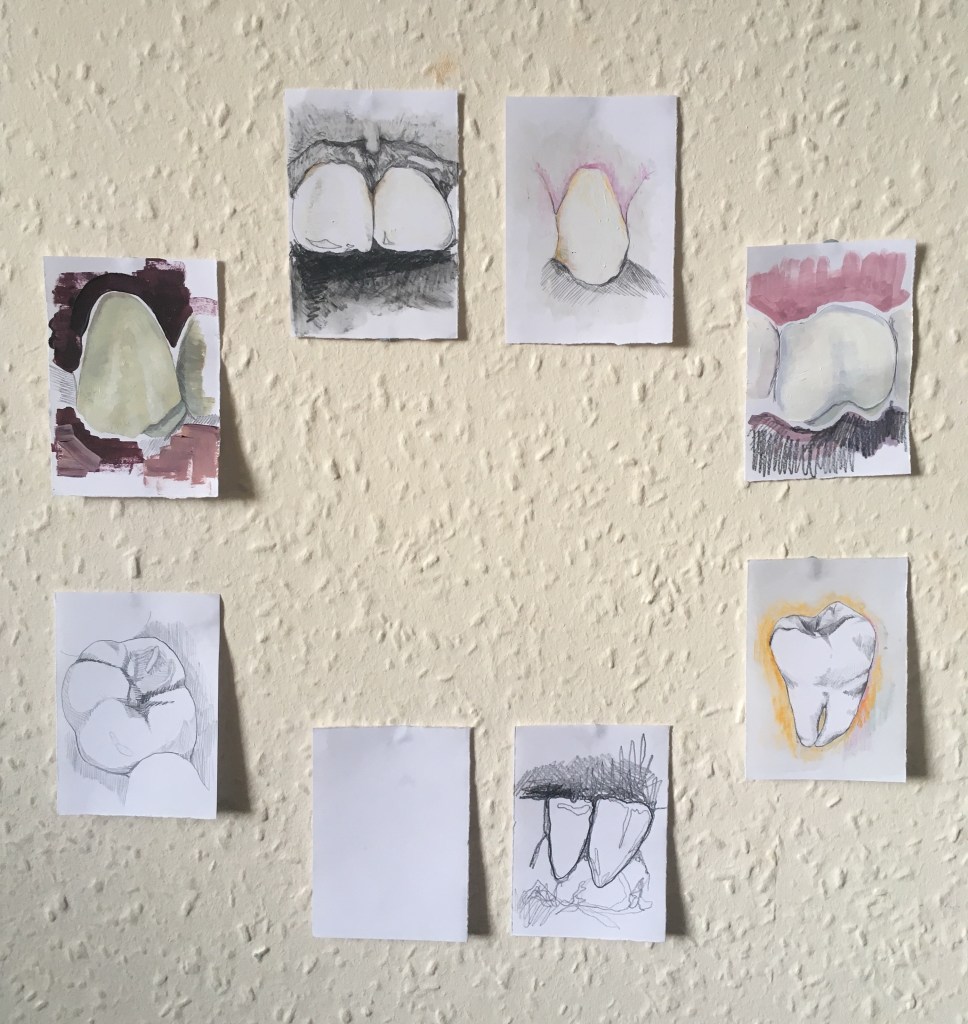


All of the above work is based on these pieces of writing below. The hand written bits are all very rough versions/first drafts but i intend to play further with words and layout.


Proposal for resolved work


Toshiko MacAdam

Toshiko macadams is a Japanese artist based in Nova scotia, canada. she is known for her large sculptural textile work and brightly coloured crochet work.
she speaks of coming from a long line of physicians and intends to carry on the wishes of her family before her. However she chose to go down that path of art as she feels creating her work is her own way of impacting people. Just by taking a first glance at the work you can tell it was made for human interaction, the vibrant colours and off shapes are so tempting and invite the viewer to explore through touch. Her work discusses how “textiles were made for the human body” as second skin and something everyone has a relationship with.
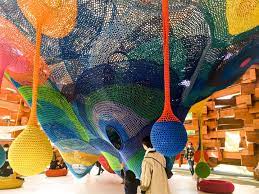
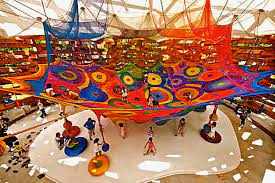
She created a series of “net play works” starting in 1979, large scale nets crocheted out of heaps of nylon rope by a team of the artists assistants; commissioned by museums and galleries as a work of public art that children can interact with. In this work there are holes and surfaces begging to be explored, touched, clambered over. it invokes the childlike sense of play most adults can relate to and provides an exciting sensory experience for young children. It was intended as a children’s playground , to provide something unique for them to get completely lost in. She felt that children were not learning from just seeing art or history in a gallery and needed something a lot more immersive and engaging.
I found it really interesting to see such unique shapes and textures be so obviously related to childs play. The soft and stretchy netting reminded me of the plasticity of a young mind and the importance of enrichment. I think using wool to weave or crochet could be really relevant to my theme if i want to relate back to a child experience. i want to invoke a similar sort of response with my work by having a tactillity to it and also being something that is recognisable as a source of care, calm and intrigue.
 Abigail yeats CAP